By Brianna Dehn
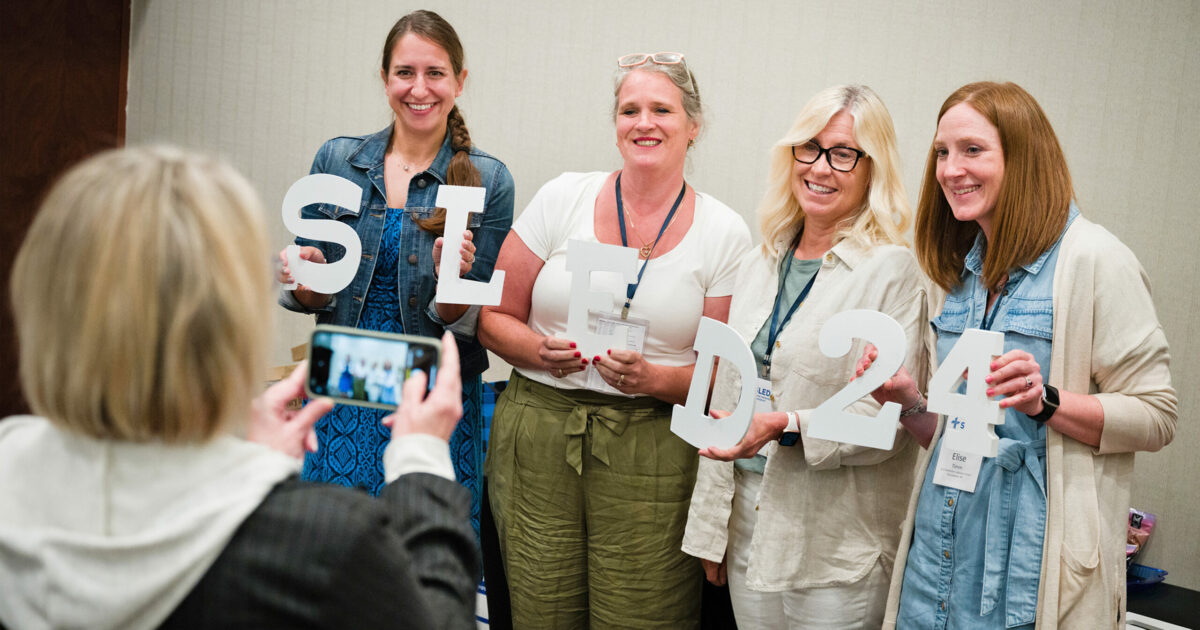
A new cohort of 18 Lutheran educators graduated from The Lutheran Church—Missouri Synod’s (LCMS) School Ministry SLED project on June 11 in St. Louis. The mission of SLED, which stands for School Leadership Development, is to identify, recruit and equip educators to serve as leaders in their schools. Since the program began in 1996, SLED has graduated nearly 600 educators.
“[SLED teaches] an umbrella of everything you need to know, as a leader, in a crash course,” said Katie Chandler, a 2025 SLED graduate. “They also set us up with the resources, people and connections to keep that learning going.”
Chandler has taken a call to be assistant principal at Our Savior Lutheran School in Fenton, Mo. “I’m so excited to dive in and use everything I’ve learned. Taking this new position at Our Savior … I can equip teachers so they can further their students’ lives, and [I can] be that support system for my school from the knowledge that I gained from this program,” said Chandler.
The need for leaders in Lutheran schools is growing. Within the next 10 years, approximately 40% of the LCMS’ school administrators are retiring, leaving a gap in leadership.
“[We] need trained leaders to fill these roles,” said Dr. Alan Freeman, director of LCMS School Ministry. “For us [as LCMS schools], part of what an [administrator] does is encouraging Lutheran identity, which flows from our leaders.”
Roughly 51% of LCMS school teachers are not rostered Lutheran educators, which presents a challenge when it comes to maintaining a distinctly Lutheran identity. “This is why we have Set Apart to Serve and our Lutheran colleges, to recruit Lutheran church workers,” said Freeman.
“The biggest challenge we face is catechizing our students — not just getting students to buy into the general concept of Christianity, but being convicted Lutherans,” said Clayton Goupil, another 2025 SLED graduate. “It’s [also] an opportunity for growth in how we see religious curriculum.” Goupil teaches at Holy Cross Lutheran Academy in Sanford, Fla., and aspires to be an administrator.
In Lutheran schools, 40% of students come from other faith backgrounds, and 28% of students come from no faith background. “For our schools, it’s about educational excellence and integrating the faith. That’s part of our Lutheran identity [and] of who we are. That’s also why Lutheran schools are viewed to be such strong schools,” said Freeman.
SLED teaches those who are in administrative roles or who are interested in entering into those roles to shift from “caring for students to caring for the teachers who will then pour into the students,” said Freeman. “The opportunity is endless for Lutheran schools because we are doing [God’s] work and spreading the Gospel message.”
“[This program] has opened up so many doors,” said Chandler. “Being a called worker and now being a SLED graduate, [I am] able to work in administration. … This [experience] has solidified where God is calling me to be.”
Posted July 14, 2025

