By Stacey Eising
“The world has arrived in North America in the past 250 years in a way that no one could have planned or expected,” said the Rev. Stephen Heimer, manager of LCMS All Nations Ministry, during the opening of The Lutheran Church—Missouri Synod (LCMS) All Nations Council, held Nov. 18–19 in St. Louis.
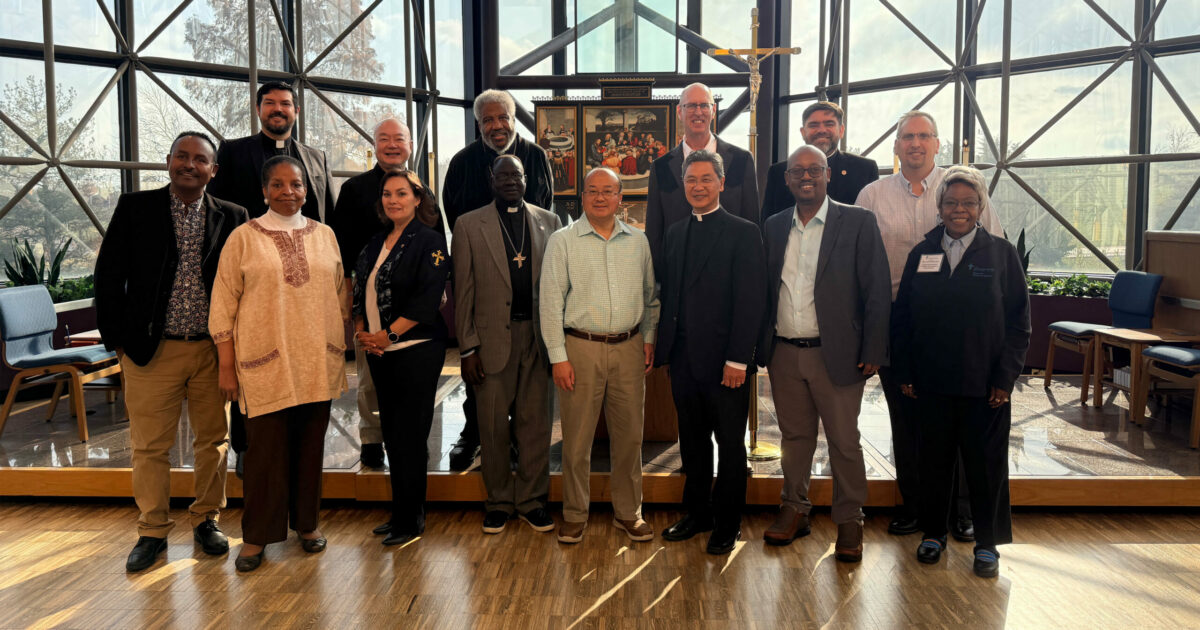
This council, organized by All Nations Ministry, brought together 13 representatives from 10 different ethnic mission societies and ministries from across the country to discuss Lutheran multiethnic ministry in the U.S. This was the third gathering of the council in 2025, with meetings also held in Baltimore in April and Chicago in September.
Represented at the November meeting were:
- Black Ministry of the LCMS Southeastern District;
- Chinese Lutherans in Mission Building;
- Evangelical Mekane Yesus Lutheran Fellowship in North America;
- Hispanic Missionary League and National Hispanic Convention;
- Hmong Mission Society;
- Messiah for Muslims;
- Multi Asian Inter-Ethnic Network;
- Navajo Lutheran Outreach;
- Oromo Evangelical Lutheran Mission Society; and
- Sudanese Lutheran Mission Society.
As a part of his introduction, Heimer pointed out data about demographics in the U.S. As of 2020, more than 50% of American youth were part of ethnic “minority” groups. By 2044, it is projected that more than half of all Americans will be.
“We’re not driven by worldly measurements; we’re driven by Christ’s promises,” said Heimer. “But it certainly doesn’t hurt to look at data and realize, ‘Hey, we are a church body with existing ministries, with a lot of opportunity throughout this country among families, among the newly arriving immigrant populations, where we can share the Gospel and encourage people into church work — to be the pastors, to be the churches that our country will need.’”
All Nations Ministry and the All Nations Council were created last year to bring together the experience of leaders working to proclaim the Gospel to various ethnic groups in America — a task that often has many shared challenges and opportunities, even in vastly different contexts.
Second-generation ministry, for example, was mentioned as a core challenge by groups as diverse as Hmong and Ethiopian, Chinese and Sudanese ministries. The concern in all of these contexts is the same: How do we best minister to the children of immigrant families, in order to keep them in the church?
“When our children graduate from high school, they have no place to go,” said the Rev. Dr. Samuel Deressa, representative of the Ethiopian Evangelical Mekane Yesus Lutheran Fellowship in North America, and professor of theology at Concordia University, St. Paul, St. Paul, Minn. “We haven’t helped them join the English language services. The only church they have in mind is the Korean Church, the Ethiopian church — and they don’t speak the language anyway. So when they graduate, they are done with church. … It’s great for us to have these [ethnic] ministries: God cares about the first generation. But God also cares about the second generation. Our children are Americans. That is what my children remind me of on a daily basis. They don’t eat what I eat. They don’t speak the language I speak. … Our kids are American kids. How do we bring them together and make this place their place?”
The council discussed this topic repeatedly, including potential solutions such as ensuring that youth are connected to English-language youth groups with American peers. Similar conversations surrounded topics such as church planting in new immigrant areas, raising up future leaders from these communities, and more.
Another key purpose of the council is this: As the diversity of the U.S. steadily increases, many who are working with particular ethnic groups are seeking guidance on how to minister to other peoples moving into their area and on how to care for various people groups within the context of one congregation. The conversation and connections formed through the council will help with this.
“I grew up in New York City, which is very multiethnic. And at the time I was growing up, we just kind of absorbed each other’s cultures, because we were all together all the time. Everybody knew some words in Spanish, everybody knew a little bit of Yiddish — and that’s one of my favorite parts about being part of this group — just being around all different cultures. And to me, if we can somehow get our church into that mindset … I think that would be a good thing,” said Janis McDaniels, representative from the Black Ministry of the LCMS Southeastern District, and member of the LCMS Board for National Mission.
In addition to presenting on and discussing the ministry efforts going on in their various locations and communities, the group discussed the goals they can work toward as a group.
“The ultimate goal, of course, is that we would be the church that Jesus is building,” said Heimer. “The church should be the first thing that we offer a world that is divided — because of the promises that God gives to us of being one in Christ.”
Posted Dec. 1, 2025