
By Mary Henrichs
“We often hear that the LCMS is 20 years behind,” said the Rev. Dr. Quintin Cundiff, kicking off a roundtable discussion during a June 23–24 gathering in St. Louis of 10 mission executives from districts of The Lutheran Church—Missouri Synod (LCMS). “When it comes to church planting, we’re on the front end of things.”
Cundiff, director of LCMS Church Planting, was describing the locally driven, lay-focused approach to church planting being taken by the Synod’s church planting office. This approach was affirmed at the 2026 LCMS convention in Phoenix with the near unanimous adoption of Resolution 1-07A: “To Increase Church Planting at the Parish Level.”
Rather than basing church plants on finding the “right guy” with the “right personality” or the “right charisma” and parachuting him into a community — a 20th-century model, Cundiff explained, that often does not yield sustainable congregations — “our process is deeply indebted to our Lutheran theology, including [our belief in] the priesthood of all believers and [our] polity, which [emphasizes] the strong relationship between clergy and laity.”
The LCMS church planting process begins when laypeople recognize a need for a church in their community — a need that is multiplying as Lutherans relocate. “As we look at the nation today … we know that people are moving to places where there is not a strong LCMS presence,” said Cundiff. “Our efforts here are not only to get those people reconnected to the church, but also to inspire those folks to reach out to others in their communities … and share the Gospel.”
Once a need for a church plant is recognized, the group on the ground reaches out to its district and to LCMS Church Planting, and the two work in partnership with the planting group. LCMS Church Planting offers grants up to $100,000 for groups whose applications are approved and who follow the LCMS church planting process. Currently, 32 church plants are actively navigating the process, with over 60 more potential sites in the pipeline.
Improved process
At the roundtable discussion in June, district leaders covered a wide range of topics — evangelism, revitalization, church planting in ethnic communities, Lutheran identity, hallmarks of sustainability, and the possibility of producing church planting resources in Spanish — and Cundiff and Kendall Cortright, LCMS Church Planting manager, shared some recent improvements to the church planting process:
- Streamlined steps, with only four stages (concept, feasibility, planning and action);
- The option for cohorts of church planting teams to join training sessions via Zoom, creating built-in support networks; and
- The inclusion of a representative from a more advanced plant on every advisory team, lending experience and cross-pollination of ideas.
As more plants and districts go through the process, Cundiff and Cortright hope that it will continue to gain traction and become more accessible. “We don’t want to create something that’s just another binder on someone’s shelf,” said Cundiff.
During the roundtable, the Rev. Dr. Yared Halche, executive director of Witness and Interethnic Ministries in the LCMS Southeastern District, shared with the rest of the group: “My prayer for all of us is to be excited [about church planting]. The hope of Christ resides in us.”
‘We go where He goes’
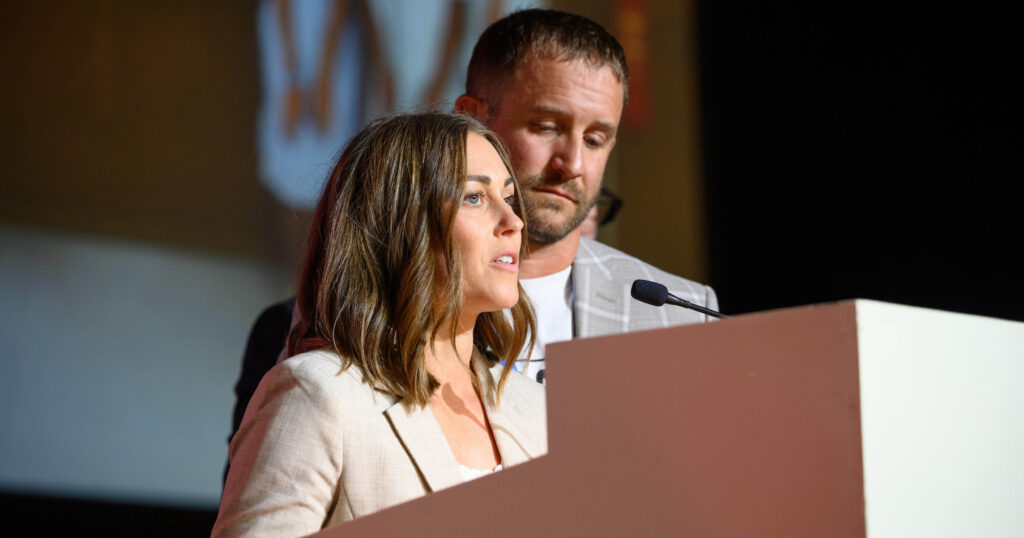
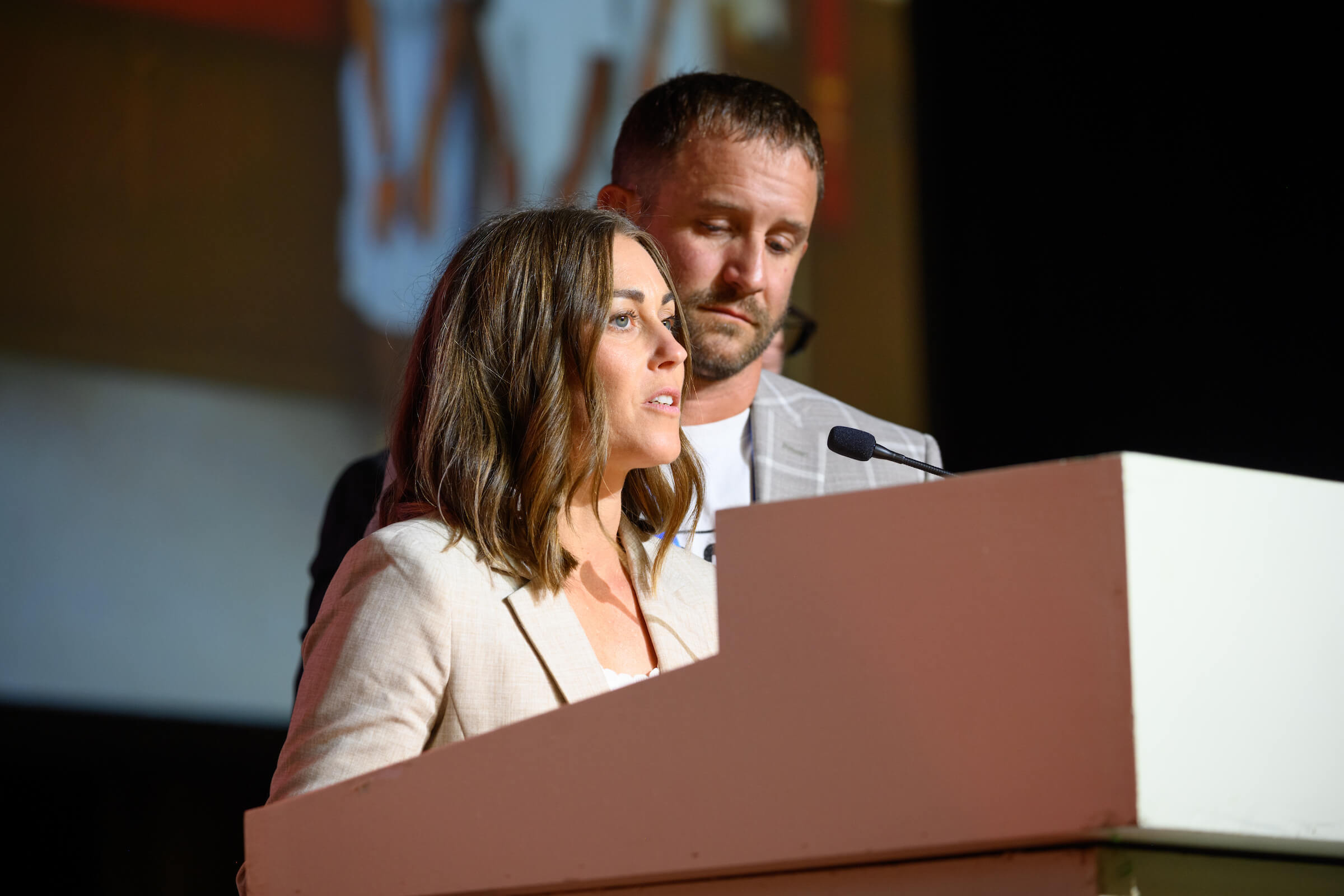
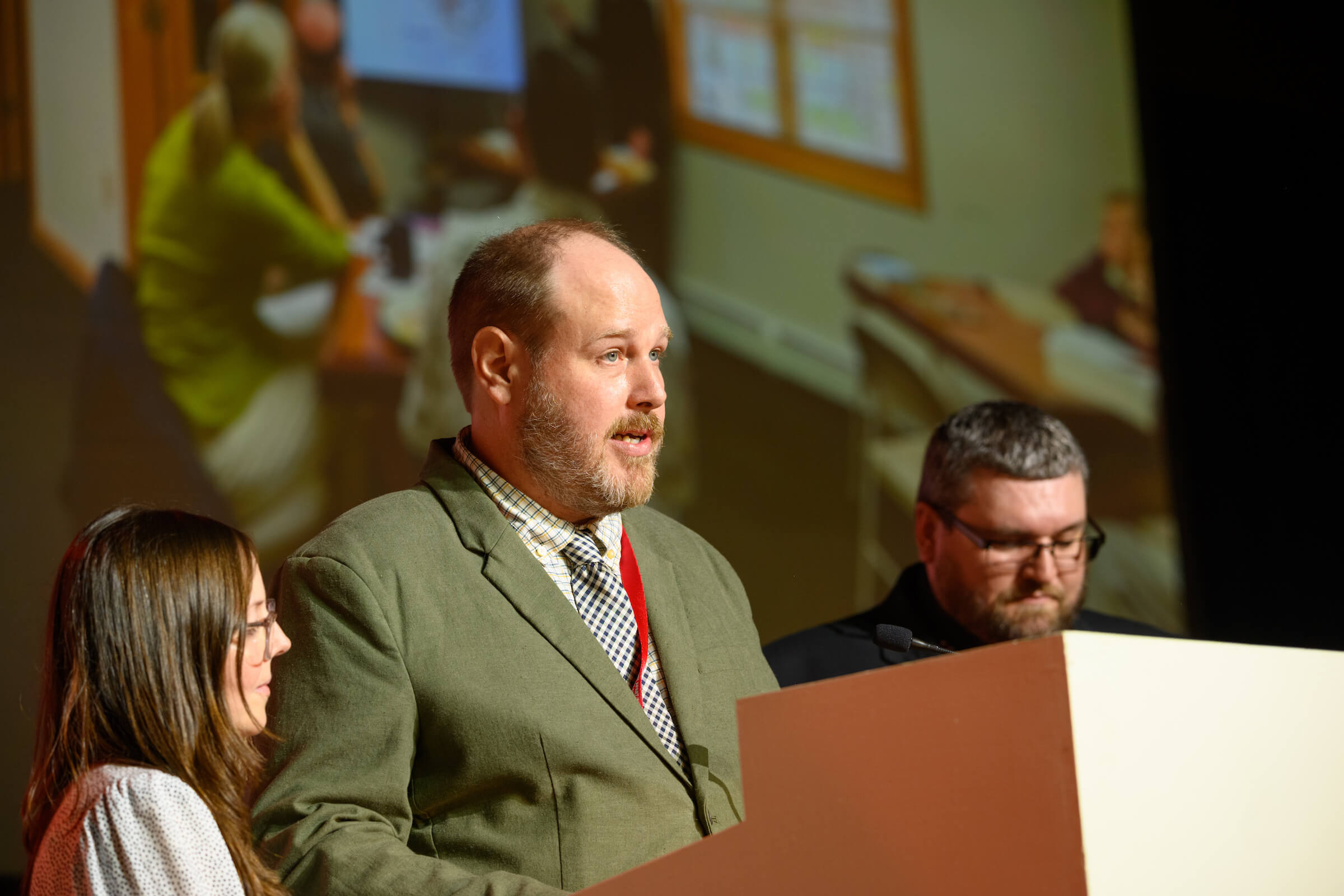
Excitement around the topic of church planting was palpable on the LCMS convention floor on July 20, when delegates heard from three lay-led groups prior to consideration of Res. 1-07A.
“In December of 2024, a miracle happened: Jesus worked in our lives and called us to faith,” said Ethan Sager, addressing the delegates. However, he and his wife, Amy, lived in Tamworth, N.H. — a two-hour drive from the nearest LCMS congregation.
Brian and Emily Hayes had a similar problem in Helena, Ala., driving an hour and a half across the city of Birmingham to make it to church — a journey that grew much harder after the birth of their son.
For families in Syracuse, Neb., the hourlong drive toward either Lincoln or Omaha made participation in youth groups and other activities during the week nearly impossible.
Thanks be to God, each of these communities now has an LCMS congregation of its own where Word and Sacrament are being administered (or will be soon) and church members are reaching neighbors with the Gospel: Lakes Region Lutheran Church in Moultonborough, N.H.; St. Michael’s Lutheran Church in Helena, Ala.; and Word of Life Lutheran Church in Syracuse, Neb.
These new church plants took root in God’s timing and through the fervent desire and hard work of dedicated laypeople.
“We do not claim that church planting is easy. Church planting is a difficult project, but a worthwhile effort,” said Cundiff. “Just as the diaspora of Christians out of Jerusalem in the first century became the springboard for mission throughout the Roman Empire, we believe that this dispersal of Lutherans in the United States can serve as the foundation of new churches that can reach out to their communities.”
Amy Sager urged disconnected Lutherans to “be Lutheran out loud in your community and create a discourse with both the unchurched and churched. Work on building a group of like-minded Christians and be a positive force in the community … and when there’s enough of you, start a church.”
Zachary and Jennifer Hansen, part of the church planting team in Syracuse, Neb., expressed hope that Lutherans looking to plant churches would “be excited, enthusiastic and bold in sharing God’s love … with lost people. They are longing to hear it.”
“This work is not done out of a sense of fear or foreboding,” said Cundiff. “We do this because our Lord Jesus Christ is still very much active in this world through His church, and He invites His people to follow after Him. We go where He goes.”
Are you in a community that needs an LCMS church? Reach out to LCMS Church Planting.
Click to learn about a recent church plant in Viroqua, Wis.
Posted Aug. 13, 2026

