By Stacey Eising
In the early 1920s, Concordia Seminary, St. Louis (CSL), had a good problem — but a problem nonetheless. Since the seminary’s founding as a one-room log cabin in Altenburg, Mo., in 1839, The Lutheran Church—Missouri Synod (at that time “The Evangelical Synod of Missouri, Ohio and Other States”) had grown by leaps and bounds, becoming, by 1888, the largest Lutheran church body in the U.S. The burgeoning student body had quickly outgrown the cabin, and in 1849 the seminary moved into a new building constructed on Jefferson Avenue in St. Louis.
However, the seminary’s student body soon outgrew that building too, as well as additions that were made to it. A larger Gothic structure, complete with a 136-foot steeple, replaced that building in 1883 — C.F.W. Walther spoke at its dedication, four years before his death.
But by 1919, enrollment at CSL was close to 400. Even after a nearby building was rented to house students, conditions were remarkably cramped: Photographs presented to the 1920 Synod convention show dormitories filled wall-to-wall with cot-like beds. Reportedly, each student had a space of only 6 feet by 6 feet for his bed and wardrobe, and 300 students were being housed in a space designed for 200.
Then the Synod made a momentous decision: “No one who attended the synodical meeting in Detroit, 1920, will ever forget the thrill of that moment when Synod unanimously voted one million dollars for a new Concordia Seminary in St. Louis,” wrote CSL professor Theodore Graebner**. Having seen clear evidence of the need, the Synod committed itself to this astonishing sum for a new seminary campus after just five minutes of discussion. (Another $1.5 million was approved at the 1923 convention in Fort Wayne, and additional gifts were given to the project from across the Synod to allow for full realization of the architect’s plans.)
In 1922, the Synod purchased a 71-acre tract of land in Clayton, just west of the St. Louis city limits. This land had been in the hands of just one family, the DeMuns, for several hundred years prior — they had received it as a direct gift from the king of Spain.
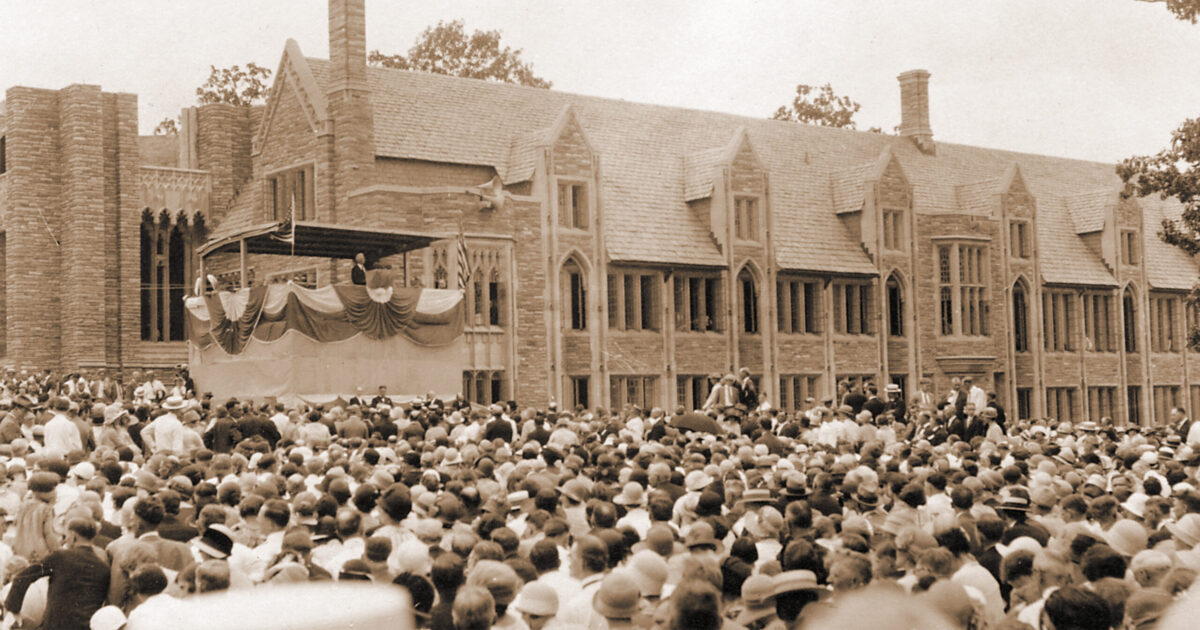
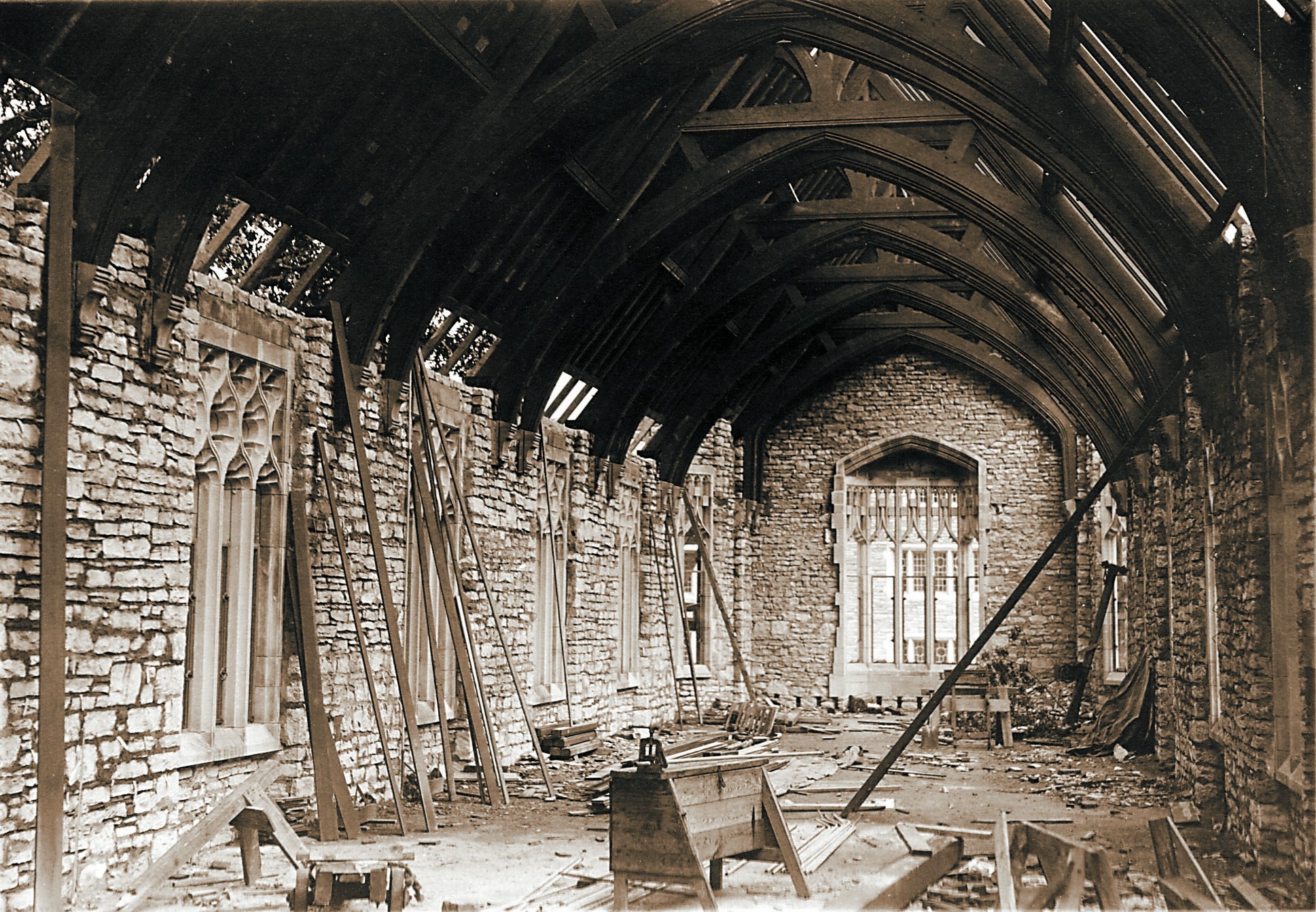
Ground was broken on a cold day in January 1924, and the cornerstone laid on Oct. 26, 1924. An estimated 12 to 20 thousand people attended the cornerstone laying, with special trains carting in Lutherans from Indiana, Illinois and Missouri. The address given that day was broadcast from the new KFUO radio station, which had been completed just the day before.
New campus unveiled
On June 13, 1926, less than two years later, nearly 75,000 people flocked back to Clayton for the dedication of the newly completed campus — an event that featured a large brass band, a choir of 800 singers, and a slate of speeches by seminary and Synod leaders. The 1926 Synod convention was being held that same week in St. Louis.
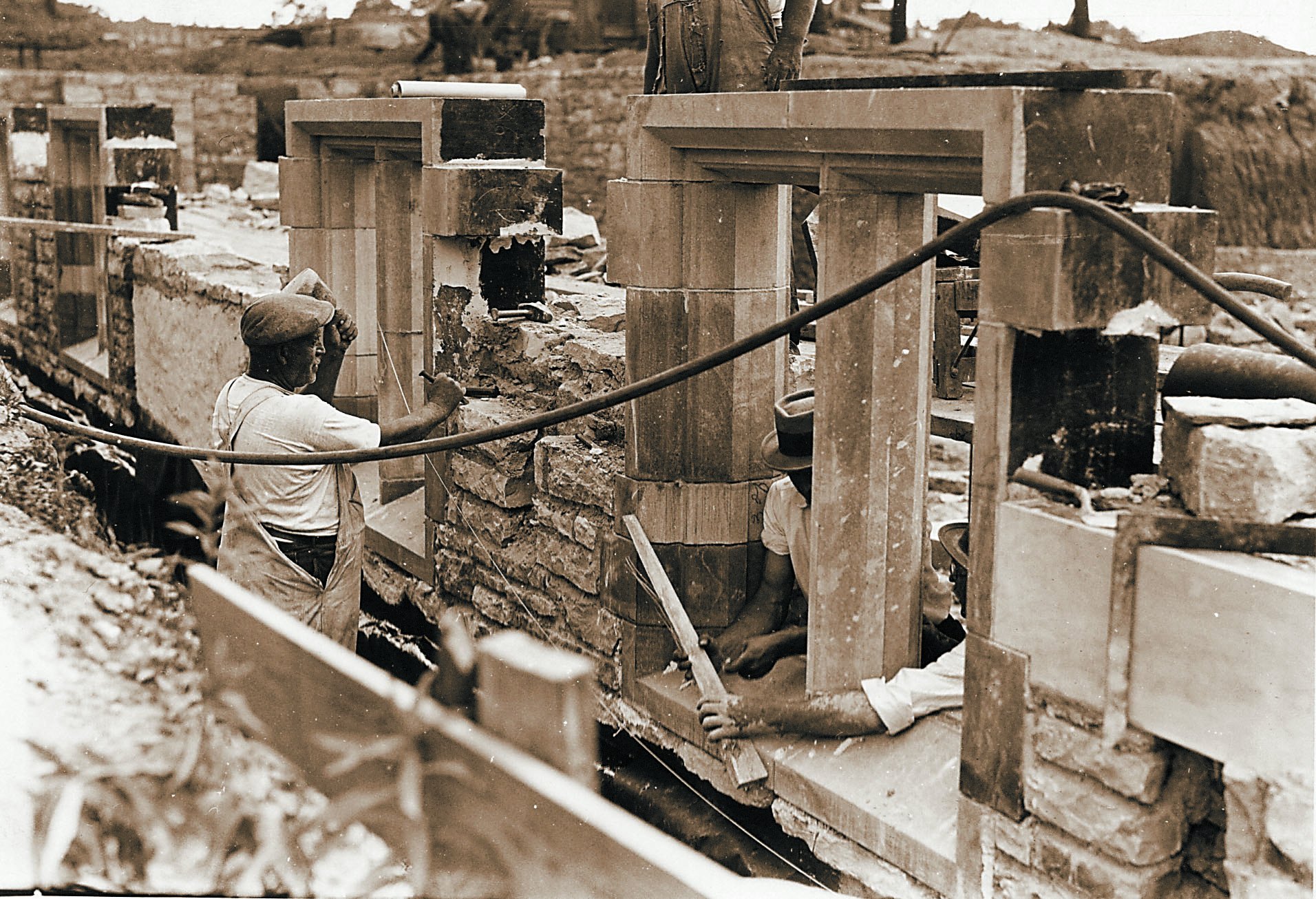
An article about the event appeared that day in The New York Times under the headline “25-BUILDING COLLEGE STARTED AS LOG CABIN”: “The style of architecture is ecclesiastical throughout. The material used is local stone of varied shades of gray and pink, with Indiana limestone trim and tracery. Most of the woodwork on the inside is of red and white quarter-sawed oak,” reported the article.
The new campus was truly a sight to behold in 1926 — as it remains today, and almost in the same form. At the time, it was the largest Protestant seminary in the country. It was designed by the Philadelphia architectural firm Day & Klauder, known nationally as premier architects in the “Collegiate Gothic” style, an American architectural style based on the English Tudor and Gothic traditions, and seen on other campuses such as Princeton, Yale and nearby Washington University.
Eighteen buildings, as well as several dormitories and a power plant, were unveiled at the dedication. Fourteen faculty houses were still under construction. Attendees moved through the campus in droves to watch the unveiling of plaques commemorating figures in Lutheran and Christian history after whom buildings, dormitories and even archways were named.
The architecture was striking — stones had been carefully selected in red, gray, yellow and white from quarries across the country. The occasional yellow stones, which make up just 5% of the walls, were taken from a quarry on a family farm in Wittenberg, Mo. (in Perry County) — the same source as the stone used to build the first Lutheran churches in Altenburg, Mo. After careful material selection and expert tuck-pointing, the result was “walls of beautiful masonry and, so far as human foresight goes, of absolute permanence,” wrote Graebner.
Indeed, a full century later, the original buildings stand seemingly untouched by time. A tornado that went through campus last year, though it took some old trees, left the buildings unmarred.
Built on the Rock
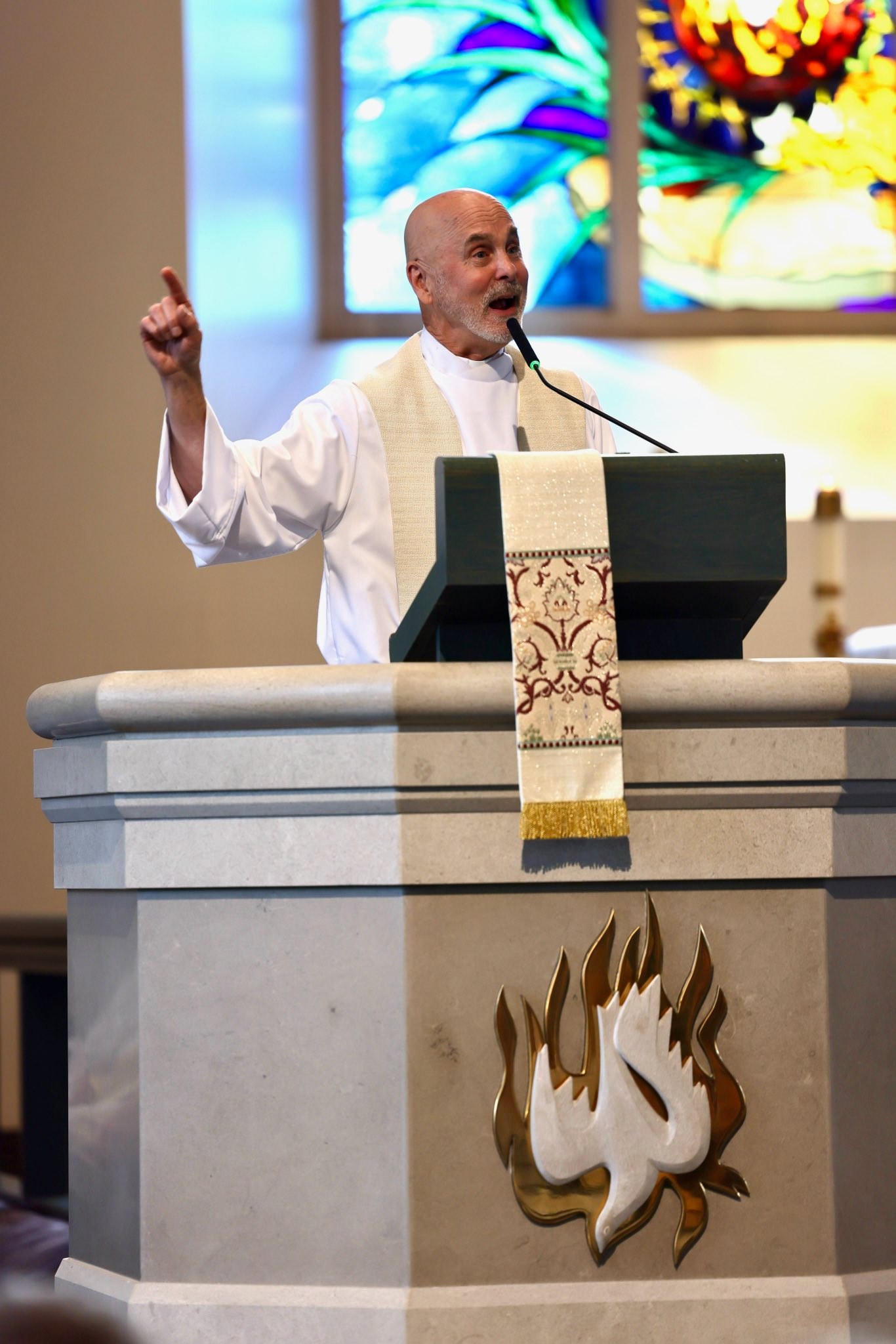
On April 26 of this year, Concordia Seminary held a Vespers service and campus community supper in celebration of the campus centennial. The Rev. Dr. David Peter, professor of Practical Theology and dean of faculty at CSL, preached at the service.
“This campus exudes permanence,” said Peter. “Built out of stone, even the roof is stone slate, which was quarried in Vermont and brought here.” Peter reflected on having a 30-year roof installed on his home recently, noting, “I’ve been told [the seminary campus slate roofing] is a 500-year roof.”
Yet, as the assembly was reminded by the hymn they sang before the sermon, even the most solid of stone buildings can and one day will crumble: “Built on the Rock the Church shall stand Even when steeples are falling. Crumbled have spires in ev’ry land; Bells still are chiming and calling” (Lutheran Service Book 645:2).
Peter went on: “There is something even more permanent than these buildings. And that is the church that this campus serves, the church of Christ.” Quoting the day’s reading, 1 Peter 2:4–9 — “You yourselves like living stones are being built up as a spiritual house” — he continued: “Christ is our foundation, the church’s foundation. … Through faith in Him, you have a permanent standing in His presence forever. … Concordia Seminary stands firmly upon that foundation of Jesus Christ. … This is our legacy of permanence.”
Following the service, the campus community joined in a meal out on the lawn between Koburg Hall and a replica of the original one-room log cabin school that stands on the seminary campus. Together, they celebrated a campus built by the sacrifices and generosity of the 3,497 congregations of the LCMS a hundred years ago, the faithful pastoral and diaconal training that has occurred on that campus since, and the hope of many more centuries of theological education in these sturdy buildings — all grounded in Christ, the true cornerstone.
“The Concordia Seminary campus is one of the jewels of The Lutheran Church—Missouri Synod,” said CSL President Rev. Dr. Thomas Egger. “It is a joy to mark the 100th year of shared life and study on these grounds with representatives from across our church body present for the celebration.”
Egger continued: “The Lord has blessed us richly here, planting and cultivating His Word in the hearts of His servants and sending them forth to proclaim the Gospel to the ends of the earth. We give thanks for these acres and buildings and homes and for the sacrifices our forefathers made to establish them for us. And we dedicate ourselves to passing along a beautiful and improved campus to the next generations, designed for the Lord’s ongoing work.”
*The photos in this story are provided courtesy of Concordia Seminary, St. Louis.
**Much of the history included in this article, as well as the quotations from Graebner, come from Theodore Graebner, Concordia Seminary: Its History, Architecture and Symbolism, Concordia Publishing House, 1926.
Posted May 8, 2026