By Stacey Eising
From raising up the next generation of altar guild servers to teaching children to use hymnals with proficiency, the work of the 12 congregations that make up the pilot cohort of the Synod’s “Sing, Pray and Keep His Ways” program is underway.
Early last year, The Lutheran Church—Missouri Synod (LCMS) received a $750,000 grant from Lilly Endowment Inc. to support LCMS congregations in nurturing the faith of young people through their participation in worship. “Sing, Pray and Keep His Ways,” which is being administered by LCMS Worship, is the result of this grant.
The first cohort of congregations was selected from a pool of applicants and received grant funds in March of this year. Applications for a second cohort of congregations are open now and will be accepted through Nov. 1.
‘Part of the church now’
Each congregation was asked to propose a project to focus on. The projects are organized around various locations in the sanctuary: the loft, pew, sacristy and chancel. At the heart of all of them is the same thing: raising youth in the faith by engaging them in the Divine Service and the life of the church.
“For generations we’ve been saying, ‘children are the future of the church.’ And I think we’re finally realizing that we need to change that saying, in that children are part of the church now — through Baptism into Christ, they share the same gifts, the same blessings with older members of the congregation, and they’re very capable of being active. … Even if it’s in smaller ways … those small little bits of talent and time are important and such a blessing in God’s eyes and to our neighbor,” said Bethany Johnson, kantor at St. John’s Lutheran Church, Topeka, Kan., one of the pilot cohort congregations.
St. John’s project will center around developing a series of congregation-wide education hour openings that flow from and support the Sunday Divine Service. These openings will feature discussion questions on the day’s Gospel readings, as well as singing and learning about the “Hymn of the Week” (the Hymn of the Day from the morning’s Divine Service, which families will be encouraged to sing together throughout the week to come). In addition to providing an opportunity for intergenerational learning and discussion, the openings will “serve as a pattern for home devotional life,” showing families how prayer, singing and listening to God’s Word together can flow from each week’s Divine Service. A second part of St. John’s project will involve encouraging and fostering the service of youth in the choir and handbell choir, as greeters, altar guild servers, ushers and more.
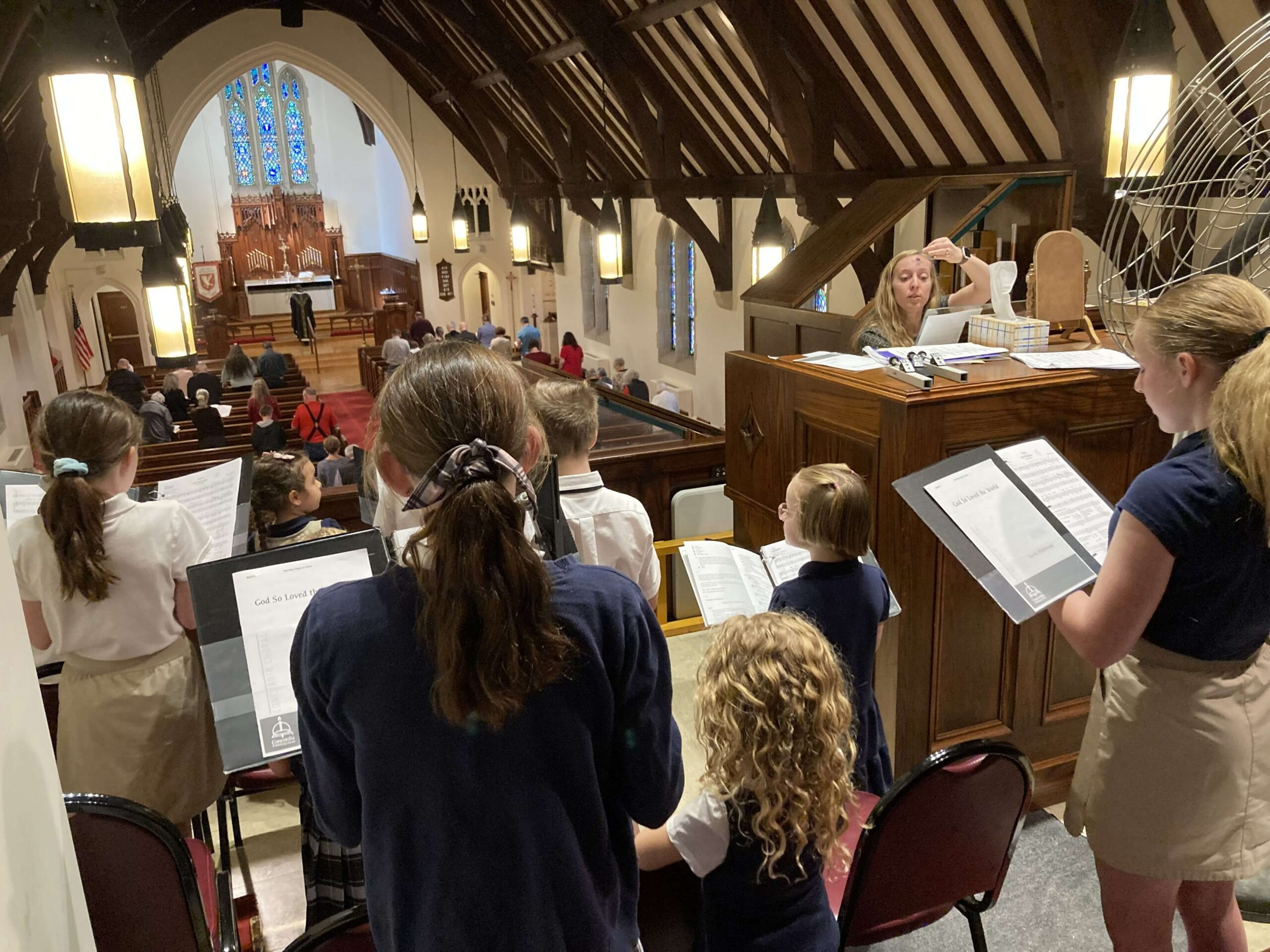
Other congregations are encouraging youth to serve in similar ways.
Trinity Lutheran Church, Worden, Ill., has an active altar guild program for girls. The counterpart to an acolyte program for boys at St. Paul Lutheran Church, Hamel, Ill., the altar guild program welcomes girls from both congregations to learn from the congregations’ women — about how to serve on an altar guild, but also about all kinds of other things. The group has become an opportunity for women and girls of all ages to have multigenerational fellowship and learn from one another about everything from painting Easter eggs to laundering surplices to showing Christian hospitality.
As its “Sing, Pray and Keep His Ways” project, Trinity, Worden, is holding a conference for girls and women from other congregations (hosted at St. Paul, Hamel, on Oct. 11) to learn about the theology of the altar guild and Christian hospitality, and to observe the way Trinity’s altar guild program operates.
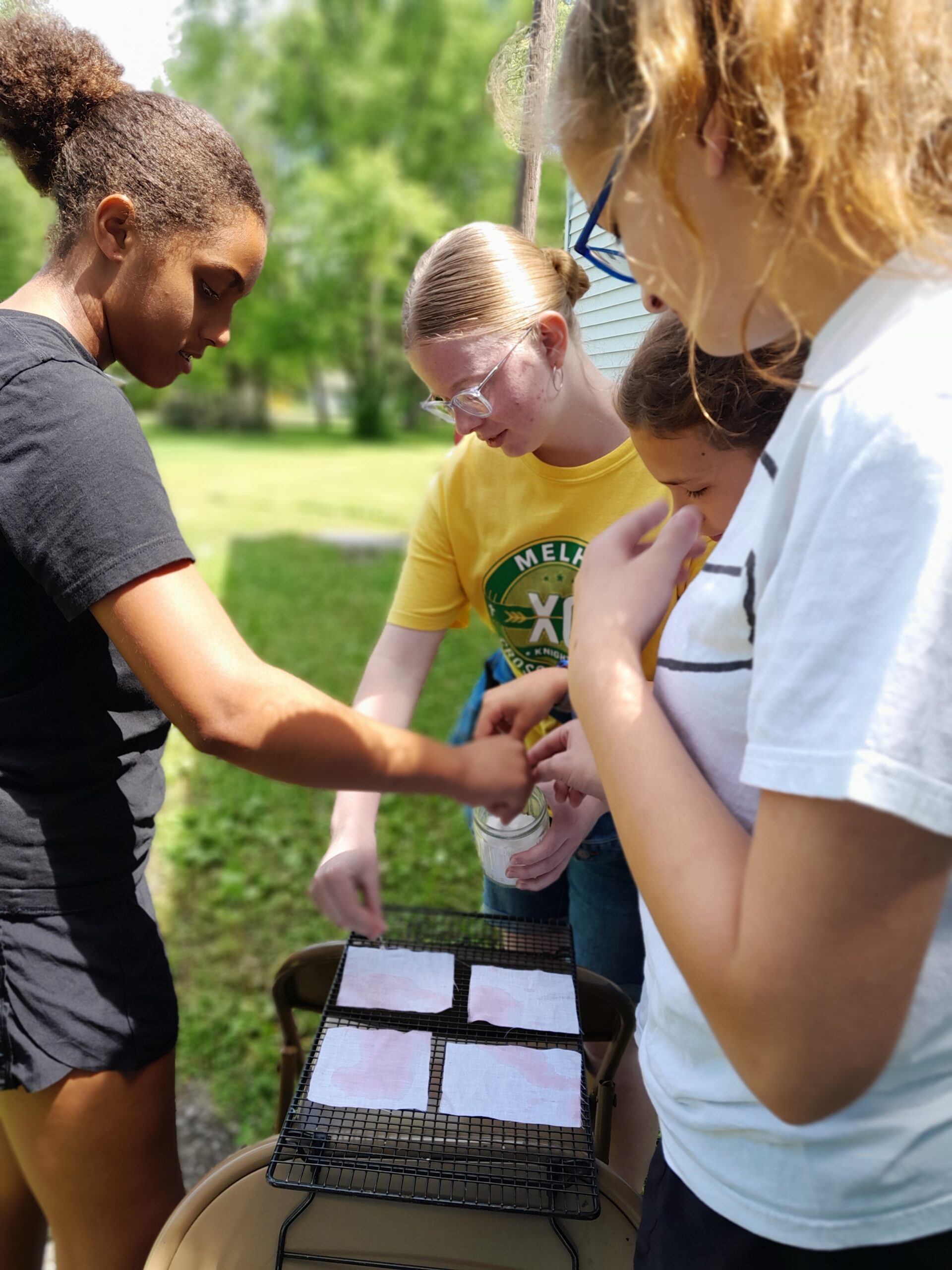
“We want other churches to have a program like this,” said Rebekah Curtis, who is involved with the altar guild program at Trinity and teaches at St. Paul. “We think the conference will help other congregations see how this can be done — especially since we’ve done it as an effort between two congregations. There are so many congregations that don’t have a critical mass of kids for something like this. … So, we can give an example of how to [partner together]. … If you are blessed enough to be near another congregation, see if you can help each other out with it.”
Trinity Lutheran Church in Cole Camp, Mo., is standardizing the way it recruits and trains up youth of all talents and dispositions to serve in and around the Divine Service — as acolytes, crucifers, altar guild members and ushers/greeters, in addition to participating in their well-established choir and music programs. They plan to develop a booklet that can be used by other congregations that details a process for inviting and training youth in these roles.
Other congregations are honing in on hymnals and hymnody.
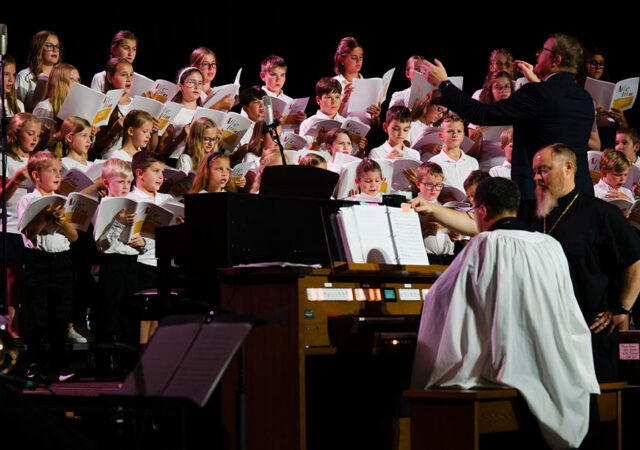
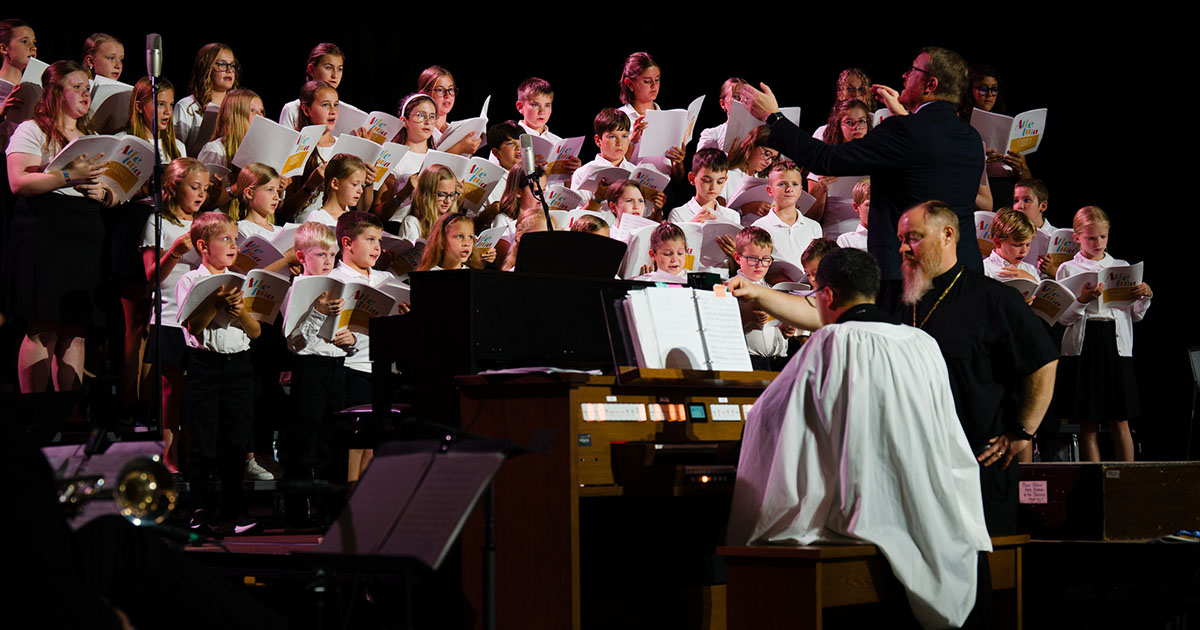
Grace Lutheran Church in Clarksville, Tenn., is designing a program for use in Sunday school to teach hymnody to children, which the Sunday school choir also will sing in the Divine Service. In 15 minutes a week during the nine months of Sunday school a year, the program will teach the children six or seven hymns by heart and will also teach them the skills needed to use the hymnal, including learning very basic music theory, navigating the hymnal and its indexes, understanding the various Divine Service settings, singing the Psalm settings, understanding the parts of the Church Year and more.
Dr. Jonathan Rudy, cantor at Grace, is excited to see the impact that this will have in encouraging congregation-wide singing. In the Mid-South, said Rudy, public corporate singing is a lost cultural art, having given way in many churches to more performance-style church choirs or praise bands. “People that do not think they are musically capable will just withhold their voice. … I hope that we can encourage people through our youth, through initiatives like this, that it doesn’t really matter if you can carry a tune. In heaven, you will be singing. Why not use church as an opportunity to practice for that?”
“We want to make sure [our youth] understand that this hymnody that they’re inheriting is theirs,” said the Rev. Don Stein, pastor of St. Andrew Lutheran Church in Rockton, Ill.
St. Andrew is starting a program where each child will receive his or her own hymnal, to be kept in a cubby at church and used to sing Morning Prayer and hymns during Sunday school. In fifth grade, the children will take their hymnal home to keep — bringing it back to church to use throughout their confirmation instruction. The congregation will also be starting a children’s bell choir.
“The Divine Service is the place for all of God’s children, regardless of how old or how young they might be. In the grand scheme of eternity, we’re all infants anyway — the Divine Service is the place where, no matter what age someone is, they are called to be there to receive God’s gifts. Jesus says, ‘Let the little children come to me,’ and so we do. We don’t send them off to children’s church or something like that. They are Christians every bit as much as any adult because of their Baptism,” said Stein.
Partnering to instill faith
In addition to their local work, “Sing, Pray and Keep His Ways” cohort congregations are also benefiting from the experience of the whole group. The leaders from each congregation gathered in June, and will gather again in October, to discuss their respective projects and provide feedback and advice for one another. They also share regular reports and updates with the other cohort members.
“The first time we met, we had so many good conversations reflecting on the different strengths and weaknesses that every congregation has. We were able to really analyze where we are as a church in terms of … music and children. It has been really great to be able to be with other congregations that are doing great things. … It … gave me the excitement to be able to carry that forward in my congregation. And we have conversations going on still, continually, always sharing ideas,” said Johnson.
Further, the impact of the program will extend even beyond the cohort congregations. Many of these congregations are developing resources that may be beneficial to other LCMS congregations looking to undertake similar work. Subsequent cohort congregations will be involved in testing some of the resources developed by earlier cohorts, in order to refine them and make them as useful as possible.
More work ahead
“Sing, Pray and Keep His Ways” is far from over — the five-year program is only in its second year, and many more congregations will have the opportunity to join future cohorts. Olivia Gaschler, project coordinator, said the hope is to get representatives from every LCMS district involved.
Currently, applications are open for the second cohort of congregations and will be accepted through Nov. 1. Plans are underway for a third cohort.
Across the country, excellent work is being done by countless LCMS congregations to raise devout Christian youth, grounding them in the life of the church in faith in their Savior. In the years to come, those behind “Sing, Pray and Keep His Ways” hope to foster even more intentionality in this work in many congregations.
“We know that children are full members of the church even at a young age,” said the Rev. Sean Daenzer, director of LCMS Worship. “We think it’s important to take every opportunity to help them grow into the faith that they’ve received from Christ. …
“There are natural ways that children are involved in worship that really present an opportunity for us to give deeper spiritual care, Christian discipleship, and teaching and instruction, and to build good Christian relationships between adults and children, as well as between the children themselves. We think this is so important for helping not only to give them a place in church right now, but also to give them a vision of their own life growing into the church in the future, showing them that, as a Christian, you have a place in Christ’s church at all times.”
Read about “Sing, Pray and Keep His Ways” at the LCMS convention.
Sign up for the monthly “Sing, Pray and Keep His Ways” newsletter.
Apply by Nov. 1 to join the second cohort.
Posted Sept. 25, 2026