By Roy S. Askins
The Pastoral Formation Committee (PFC), formed at the 2016 convention of The Lutheran Church—Missouri Synod (LCMS), is tasked with “ensuring that the Synod’s objective of training pastors is fulfilled consistently” (Bylaw 3.10.4) and considering “the long term strategic direction of pastoral formation within the Synod” (Bylaw 3.10.4.5). As part of its work, the committee has regularly sought input from LCMS laity, pastors and church leaders. Sometimes this means visiting district conventions. Other times it means offering listening sessions for interested parties to share their perspectives on LCMS pastoral formation, present and future. In the coming months, the PFC is offering two listening sessions in every LCMS region in coordination with district leadership across the Synod.
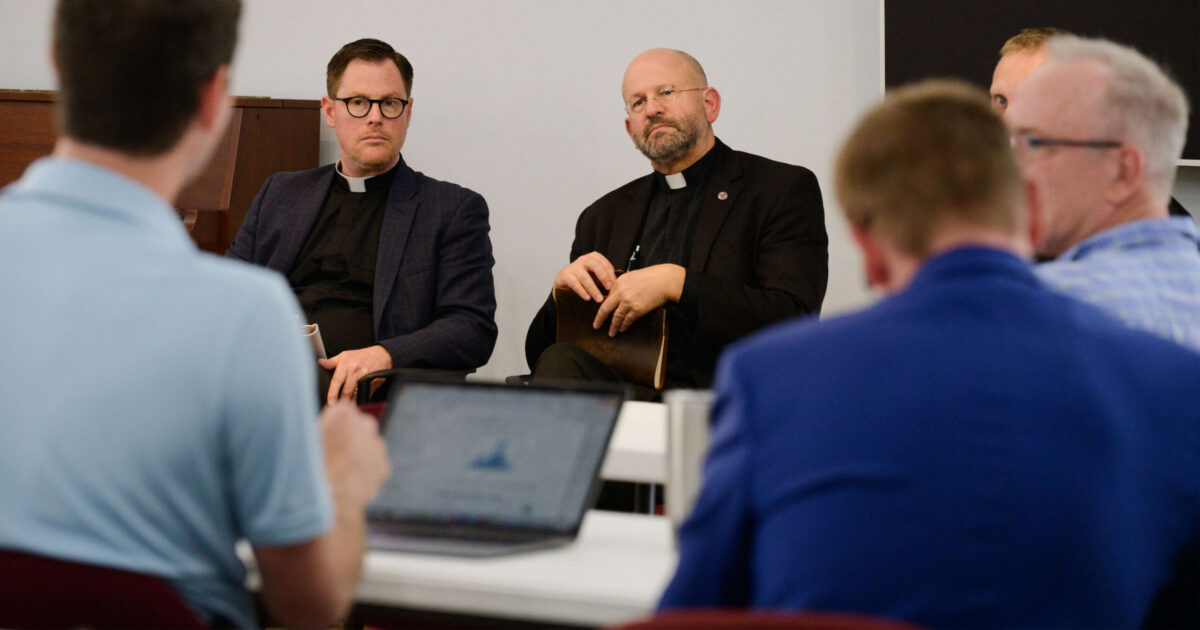
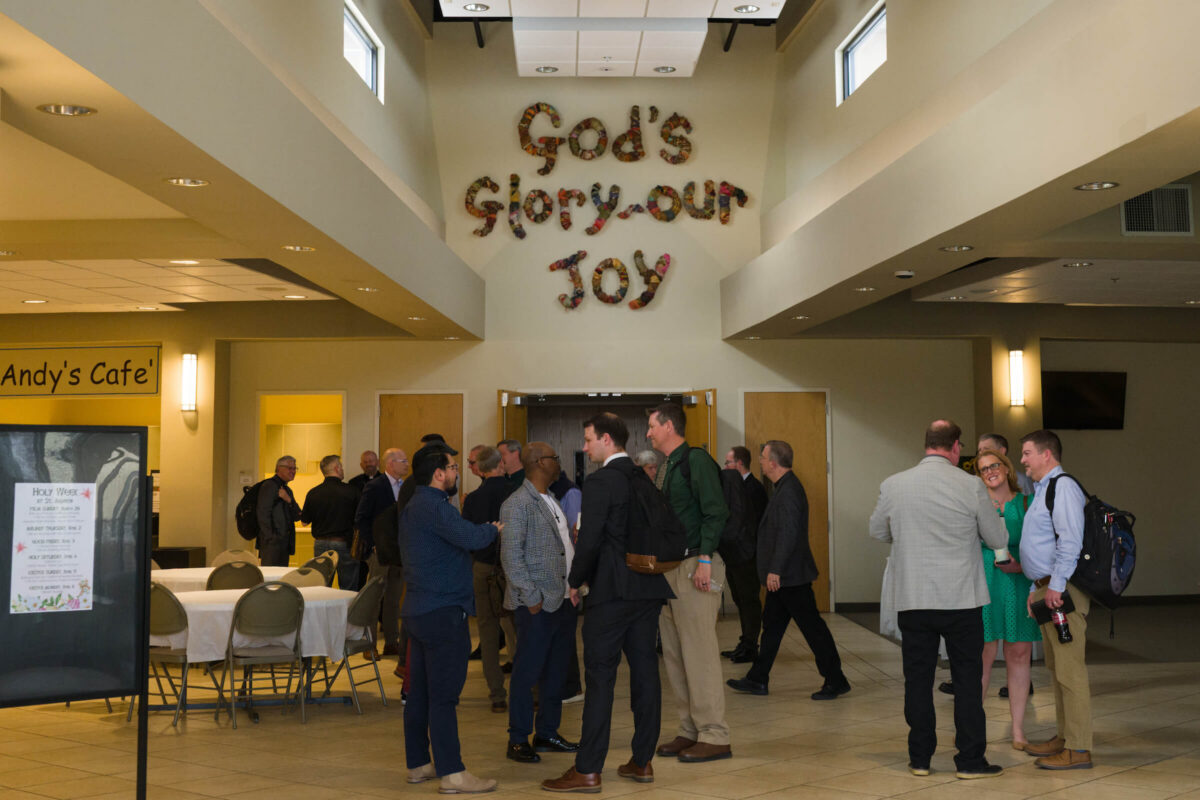
On March 26–27, the first two listening sessions, each lasting over three hours, were held in the LCMS East-Southeast Region — at The Lutheran Church of St. Andrew, Silver Spring, Md., and at Christ the King Lutheran Church, Orlando. Representatives of multiple districts attended both sessions. The Rev. Dr. Bill Harmon, president of the LCMS Southeastern District, and the Rev. Stephen Gewecke, president of the LCMS New Jersey District, attended the St. Andrew session. Between 30–50 laity, pastors and church workers attended each session.
The entire PFC was present for both sessions, including the Rev. Dan Galchutt, interim chief mission officer of the LCMS; the Rev. Dr. Thomas Egger, president of Concordia Seminary, St. Louis (CSL); the Rev. Dr. Jon Bruss, president of Concordia Theological Seminary, Fort Wayne (CTSFW); and the Rev. Dr. James Baneck, executive director of the LCMS Office of Pastoral Education. The PFC members shared opening remarks and then listened to the perspectives on pastoral education shared by the session attendees.
Both sessions demonstrated a mutual commitment to the training of quality pastors, a commitment that grows out of the Lutheran conviction that pastors stand in the stead of Christ as seelsorgers, or physicians of the soul, who will ultimately stand before God and give account for how they watched over the souls entrusted to their care (Heb. 13:17). This shared commitment was on full display during the listening sessions.
“We’re all concerned about having quality pastors and [about] the formation of those pastors being done in a good way so that we have faithful pastors who will serve well,” said Gewecke. “But just how do we go about doing that? Maybe there’s some adjustments that we could do.”
Many of the comments and concerns placed before the PFC during these listening sessions related to filling vacant congregations, an ongoing concern for many districts, though particularly difficult on the coasts. The Southeastern District struggles to fill vacancies due to increased cost of living; many pastors prefer the Midwest, where they grew up and have extended family and may prefer more culturally conservative Midwestern Lutheran communities. “It’s not only the number of vacancies,” Harmon noted, but also “the time it takes to fill the vacancy. … I tell my congregations [it will take] three years [to find a pastor].”
While the LCMS has long enjoyed a robust, residentially trained ministerium, some voices in the coastal districts and around the LCMS see alternate routes to ordination, such as the Specific Ministry Pastor (SMP) program, as a way to address pastoral shortages and keep future pastors within the community. Some concerns expressed by attendees revolved around requirements in the “Policy Requirements for the Specific Ministry Pastor Program” document finalized and distributed in November 2025 by the PFC — most commonly the requirement that, ordinarily, those admitted be at least 40 years old.
Egger noted that the age was not arrived at arbitrarily: “Men who are younger than 40 have a higher attrition rate in the [SMP] program,” he said. This not only hurts the candidate for ministry, but also the congregation that the SMP vicar or pastor serves: “It is disruptive to the life of the congregation where that man has begun to serve and has been regarded as, in some sense, the pastor in that place.”
The PFC expressed appreciation for the needs the SMP program can fill and its proper place in the life of the church. “But for the regular preparation of pastors in the M.Div. route, we are of the conviction that the quality of education and the quality of formation that’s able to be delivered in a residential context is far superior to other modes of delivery,” Bruss said.
That’s due in part to the incarnational nature of Lutheran theology. Bruss continued: “[God] continues to come to us through His Word on your lips [and] your lips to somebody’s real, fleshly ear. He comes to us through Baptism — water poured over the head of an individual. He comes to us through His holy Supper … none of which can be accessed virtually.”
Other attendees noted that pastoral formation does not end when seminary classes are completed; both lay and ordained attendees expressed a desire for ongoing training as part of ongoing pastoral service in the LCMS.
A pastor at the St. Andrew session noted that half of the pastors in his circuit did not know Greek or Hebrew, thus hampering the circuit from engaging in the standard exegetical study of biblical texts. “Would it be possible to deploy seminary professors around the country in the same way we deploy professors overseas for six weeks or a quarter or a semester … and offer [Greek] instruction for a cohort of people who are in the same geographic region?” he suggested.
Other suggestions revolved around providing ongoing continuing education credit for pastors to engage in ongoing study. CTSFW already provides over 42 continuing education weeks every year, and CSL likewise provides numerous opportunities for online and on-site continuing education programs.
Most of the attendees found the listening sessions helpful and appreciated the willingness of the PFC members to visit and speak with them face to face. Harmon noted how these sessions “show the heart of the listeners. The fact that the Pastoral Formation Committee says, ‘You know what, there are things to learn. There are people who want to be heard, and instead of a Zoom or a survey, we’re going to come right to you in your context where you live, to not only hear you, but to see you and to experience where you serve.’”
While the PFC spent significant time with key leaders, pastors, district conventions and laypeople across the LCMS — for example, attending 20 district conventions last summer — to craft the guidance offered to the Synod regarding pastoral formation, the committee appreciated hearing from more LCMS people and remains committed to ensuring that LCMS congregations have both the quantity and quality of pastors who will serve the church for years to come.
“You can believe that everything that we heard, we take home. We think about it,” said Baneck to the assembled attendees at Christ the King, assuring them that these meetings will inform the ongoing work of the PFC. “Thank you very much for your sacrifice of time and being here and sharing your thoughts with us.”
Plans are currently underway to host two listening sessions in the LCMS West-Southwest Region, particularly in Kingwood, Texas, and Scottsdale, Ariz., in June. The LCMS Texas District and the LCMS Pacific Southwest District will be promoting these events through normal communications channels. The LCMS Great Lakes, Great Plains and Central regions will host PFC sessions after this summer’s national LCMS convention.
Posted April 8, 2026

