By Mary Henrichs
It has been a busy three years for The Lutheran Church—Missouri Synod’s (LCMS) Disaster Response ministry. At the start of 2026, the Rev. Dr. Ross Johnson, director of LCMS Disaster Response, looked back at the work accomplished over the past triennium, compiling some staggering statistics in the process.
Drawing on data from Jan. 1, 2023, through Dec. 10, 2025, these numbers not only “illustrate the extensive engagement, national reach and growing demand for Disaster Response’s training, deployments and mercy work,” said Johnson, but also “represent people served in the name of Jesus.”
Domestic impact
Over the last three years, LCMS Disaster Response awarded 111 grants domestically, totaling $3,427,748.08. The $3.4 million has been distributed to LCMS districts, congregations and Recognized Service Organizations (RSOs), assisting communities affected by hurricanes, tornadoes, floods and wildfires and strengthening congregational capacity to respond to disasters.
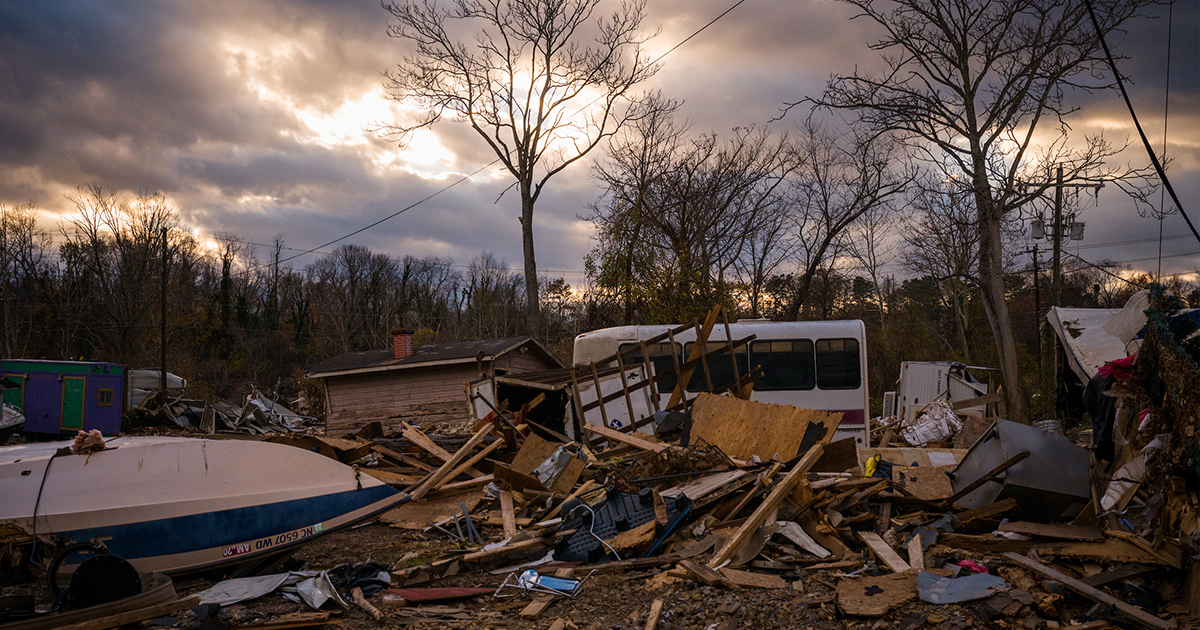
Major disasters were followed by major funding for recovery efforts: In response to Hurricane Helene, which caused catastrophic flooding in North Carolina in September 2024, 11 grants totaling $714,020 were awarded to the LCMS Southeastern District, its congregations and RSOs. For relief after both Hurricanes Helene and Milton, which pummeled Florida in quick succession, nine grants totaling $560,000 were awarded to the LCMS Florida-Georgia District, its congregations and RSOs. In both cases, funding went toward providing equipment, mobilizing volunteers, expanding local outreach and strengthening long-term recovery efforts.
“One of the most encouraging parts of this work is that it strengthens ministry long after the storm has passed,” said Johnson. “Training and grants do not only address immediate needs; they build long-term capacity for congregations to serve their communities year after year. That ongoing presence is often where trust is built and the Gospel is heard.”
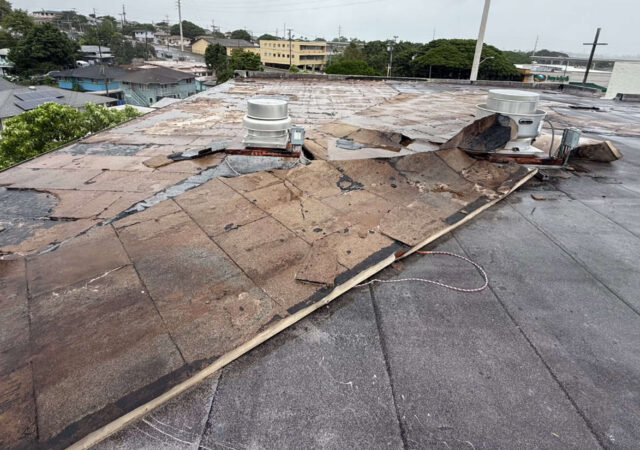
Following the tornado that tore through 20-plus miles of St. Louis in 2025, Disaster Response awarded 11 grants totaling $354,621 to assist in rebuilding churches and schools, particularly in underserved neighborhoods.
While the amount of funding given is certainly impressive, so is the work done by volunteers on the ground: In response to the St. Louis tornado last summer, over 250 storm-damaged trees were removed by Lutheran Early Response Team (LERT) chainsaw volunteers, saving churches, schools and homeowners an estimated $625,000 in tree-removal costs.
The substantial efforts of LERT volunteers across the nation add up. Over the past three years, 4,755 volunteers have participated in training, and 6,630 have been deployed. Across that same time frame, some 27,010 hours have been given by volunteers receiving training, and 50,340 hours have been recorded serving in the field, totaling 77,350 hours given by LCMS disaster responders throughout this period.
Put another way, those 77,350 hours make up the equivalent of over 8.8 years. This means that over the past three years alone, through 249 disaster deployments and 265 training events, LERT volunteers have given almost nine years of time serving their neighbor.
“We have seen an extraordinary combination of faithfulness and growth,” said Johnson, reflecting on the volume of volunteers and hours. “God has used ordinary Lutherans with practical skills and compassionate hearts to bring real help and real hope.”
International impact
The work of LCMS Disaster Response does not end at the national border. Since Jan. 1, 2023, the LCMS has supported disaster relief in 12 countries across Asia, Latin America and Africa, providing $1,082,873 in grants to assist global partner churches. These grants supported distribution of food, water and essential relief supplies following natural disasters, and they also supported the rebuilding of Lutheran churches, schools and the homes of church workers and community members.
Responding to catastrophic floods in 2023 and 2024 in Rio Grande do Sul (the southernmost state of Brazil), grants totaling $405,000 were given to the Evangelical Lutheran Church of Brazil (IELB), with which the LCMS is in partnership. Through the help of this funding, the IELB was not only able to rebuild eight Lutheran churches, replace and reprint destroyed confessional materials, and assist more than 2,200 affected Lutheran families, but it also held a nationwide Disaster Response training conference, attended by over 200 pastors and lay leaders, strengthening the church body’s long-term capacity to respond to future disasters.
Following devastating fires in February 2024 in Viña del Mar, a populous city located in the Valparaíso region of Chile, $310,000 in grants were awarded to the Confessional Lutheran Church of Chile. These funds supported construction materials to rebuild 100 homes; a full-time Lutheran psychologist to provide trauma counseling; distribution of over 30,000 meals; and full-time pastoral care, children’s ministries and volunteer coordination from across Latin America.
The efforts in Chile ultimately served more than 8,000 people through preaching, teaching, mercy care and spiritual support, showing the love of Christ to people in need.
“Whether in St. Louis after the tornado, along the Florida Gulf Coast after hurricanes or alongside partner churches overseas, the story is consistent: Lutheran mercy is offered with the Gospel at the center, and it is carried out with care, organization and compassion,” said Johnson. “In the midst of suffering, we want people to know they are not forgotten and that Christ is near.”
Learn more at lcms.org/disaster.
Mary Henrichs (mary.henrichs@lcms.org) is a staff writer for LCMS Communications.
Posted Jan. 28, 2026