
By James Baneck
“Each sermon then becomes more important than all those sessions which spend their time discussing big church resolutions regarding the Bonn constitution, the atom bomb, or Goethe’s 200th birthday.”1
Hermann Sasse’s point in the quote above is that there is nothing more important than the preaching of Jesus Christ. In the same passage, he writes, “All this [worldly power and importance] must pass away and will pass away. … But the holy ministry, preaching repentance and forgiveness, and the congregation of the faithful, who in faith are justified sinners — that will remain” (emphasis added).2
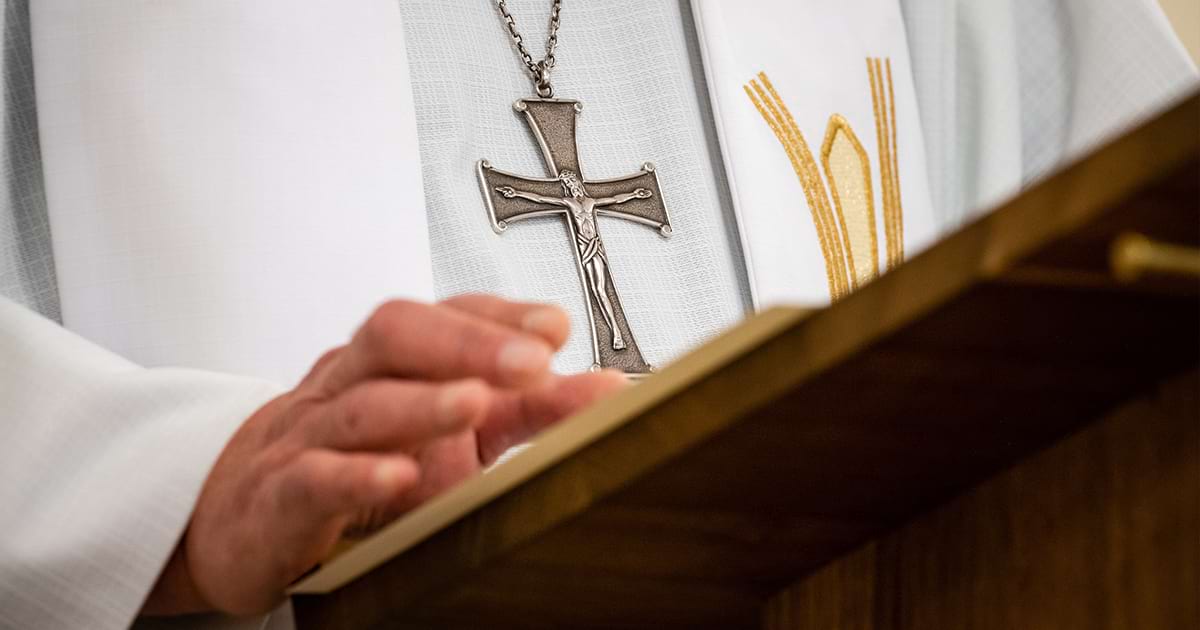
Fast forward to April 2026. Something divine — something very sacred — just took place in the chapels of our seminaries in Fort Wayne and St. Louis. It has been happening for over 180 years. Several men ascended the chancel in the presence of the Lord of hosts. Their full names were spoken to all the church along with the names of the congregations they will be serving. The everlasting, almighty, holy and gracious God — Father, Son and Holy Spirit — called them into the Office of the Holy Ministry.
God formed these men — many from infancy — through their parents, pastors, Sunday school teachers, grandparents, laypersons, youth leaders, school teachers, professors and vicarage supervisors. Mostly, He formed them through the preaching and instruction of the Word. He formed them in the liturgy and the Small Catechism. He formed them through life experiences and trials. He formed them through a community of peers and theological instruction. He formed them through the sacrifice and prayers of many. He formed them into a cruciform life of service, humility and faithfulness to God and His Word.
The Lutheran Church—Missouri Synod (LCMS) doesn’t just make this stuff up. God promises: “I will give you shepherds after My own heart” (Jer. 3:15). “Feed My sheep” (John 21:17). “‘How beautiful are the feet of those who preach the good news!’ … So faith comes from hearing, and hearing through the [preaching of the] word of Christ” (Rom. 10:15, 17).
After these men pack up their belongings and move to their first call — then what? Then they will preach the Word of Christ through which the Holy Spirit will create and sustain saving faith. Then, in the stead and by the command of Christ, these pastors will forgive the sins of God’s people. They will visit you and care for your life, body and soul. They will catechize your children and grandchildren with the Word of God — the one thing needful.
They will bring the Word of Christ to your spouse in his or her last days on earth. They will speak God’s Word and pray with couples whose marriages are troubled. They will lead the women’s Bible study and visit with quilters as they stitch. They will work beside the members of the congregation while looking after those members’ souls. They will officiate your child’s wedding and preach at your mother’s funeral. These men are called by Christ to represent Him and His holy Word for the sake of our eternal souls and that of our family and friends.
Forming and calling pastors is most sacred. It is the work of God through His people. Tomorrow’s pastors are in your congregation and in your family right now. Talk to the boys and men in your congregation — encourage them to consider the Office of the Holy Ministry. Learn more at lcms.org/sas.
The Rev. Dr. James Baneck is executive director of the LCMS Office of Pastoral Education.
1 The Bonn Constitution was the 1949 constitution of Germany. Johann Wolfgang von Goethe (1749–1832) was Germany’s most influential writer, who described himself as a non-Christian, who abhorred the crucifixion of Christ, and whose thought and philosophy has had great effect on present-day culture.
2 Hermann Sasse, We Confess the Church (St. Louis: Concordia Publishing House, 1986), 82. Sasse (1895–1976) was a German Lutheran pastor, theologian and author who is considered one the foremost confessional Lutheran theologians of the 20th century.
Posted April 30, 2026


“There is no true, basic difference between laymen and priests, princes and bishops, between religious and secular, except for the sake of office and work, but not for the sake of status. They are all of the spiritual estate, all are truly priests, bishops, and popes. But they do not all have the same work to do. …A cobbler, a smith, a peasant—each has the work and office of his trade, and yet they are all alike consecrated priests and bishops. Further, everyone must benefit and serve every other by means of his own work or office so that in this way many kinds of work may be done for the bodily and spiritual welfare of the community, just as all the members of the body serve one another.”
Martin Luther, To the Christian Nobility, LW 44:127-130.