By Roy S. Askins
If you drive into Charleston, Ill., from the west, it almost seems like business as usual — not as though an EF-2 tornado ripped through the town six days ago, cutting power, throwing trees over roads and into homes, and causing catastrophic damage. But that’s precisely what happened.
On the evening of June 19, the tornado devastated parts of Charleston north of Lincoln Avenue, which bisects the town. It is for times like this that Lutheran Early Response Teams (LERTs) exist.
“We had a very active LERT capacity in [the LCMS Central Illinois District (CID)], but that’s fallen off the past few years,” said the Rev. Michael Schuermann, who chairs the CID Human Care and Worker Wellness Committee. “We were in the process of getting it back up and running,” but it wasn’t quite yet at full capacity when the tornados hit on June 19.
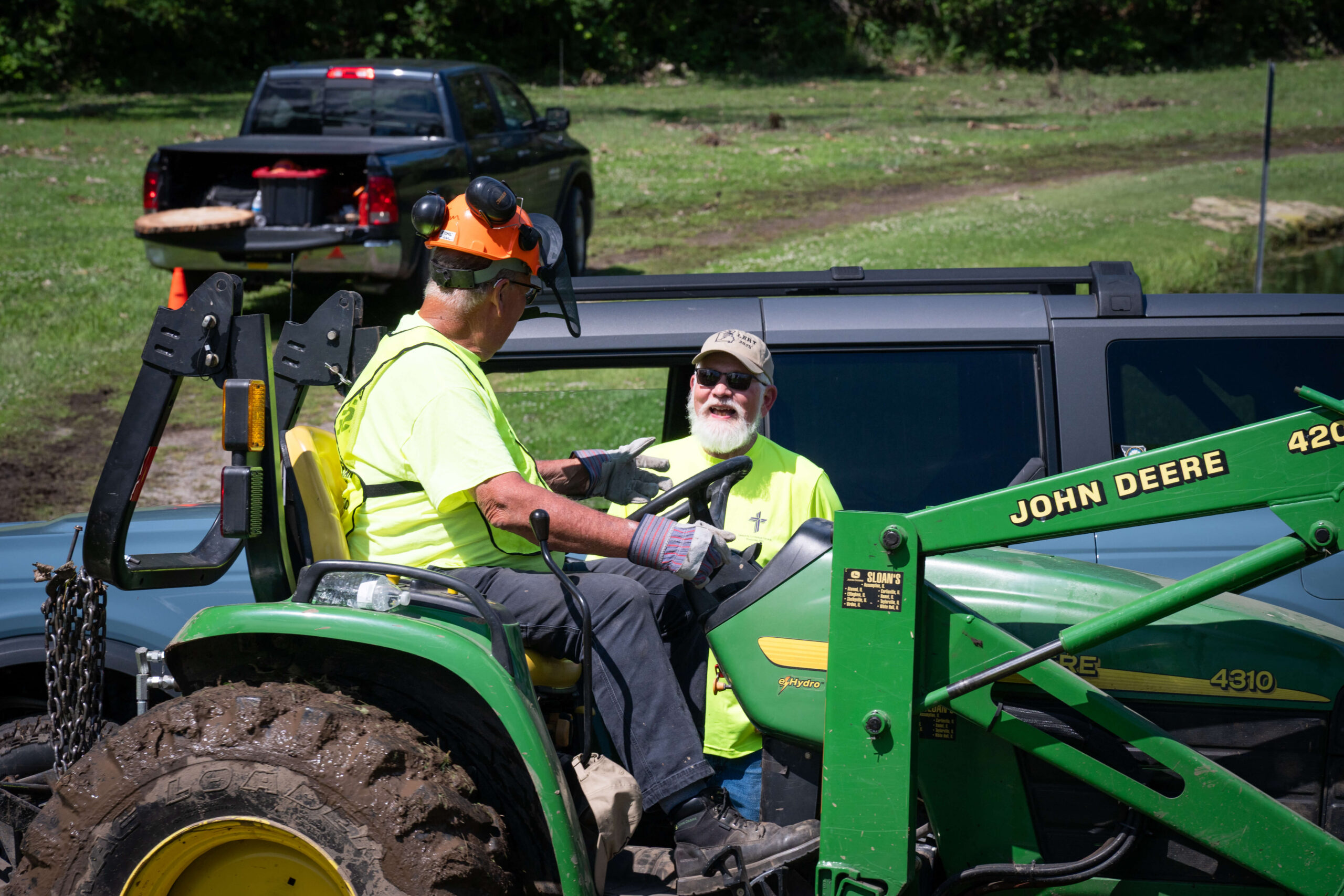
That’s why LCMS (Lutheran Church—Missouri Synod) Disaster Response called in Kris Schuldt, the LERT district disaster response coordinator (DDRC) for the LCMS Missouri District, to help coordinate the district’s tornado response in Charleston. Schuldt, a former telephone company employee whose job it was to secure telephone stations on the coast prior to hurricanes and then coordinate the telephone company’s response in the aftermath, has spent more than six months over the last two years sleeping on a cot in order to coordinate the work of LERT volunteers primarily in the Midwest.
As a DDRC, Schuldt usually arrives within a day or so of the disaster, and he starts at the local congregation. “I usually get with the pastor and spend a day with him,” Schuldt said. “I’m looking [to see] if he needs help, and he doesn’t know it.” For the response in Charleston, that meant visiting Immanuel Lutheran Church in Charleston and connecting with the Rev. Sam Smith.
“It’s truly meant a lot to have the LERT volunteers here,” Smith said. The day the tornadoes hit Charleston, Schuermann let him know that Schuldt would be coming. “[Schuldt was] immediately assessing. Where are his volunteers going to stay? He [did] a tour around town,” Smith said. Almost immediately, Schuldt recognized they were going to need a crew, and by Monday morning the bright neon-green-shirted volunteers were hard at work.
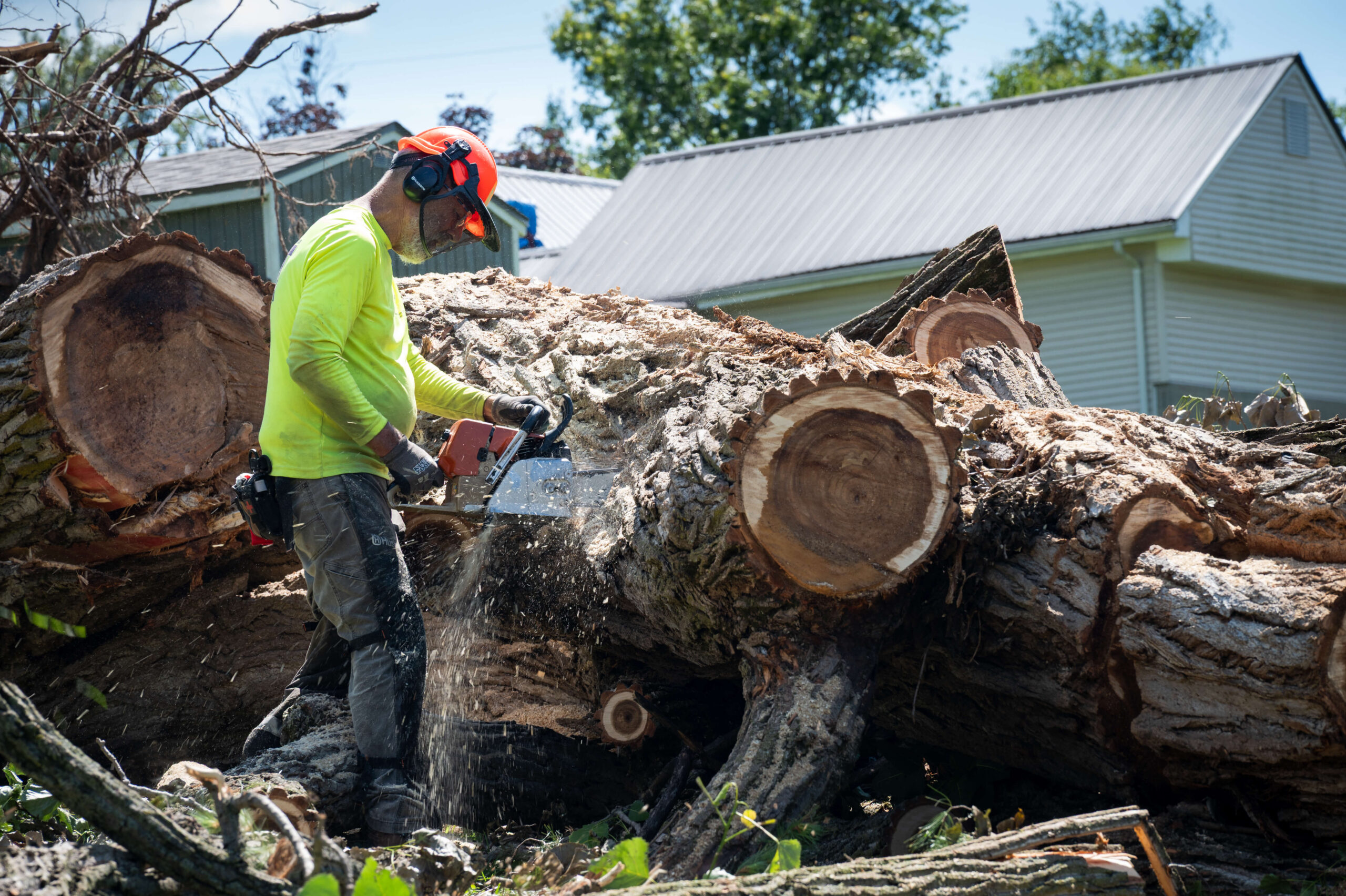
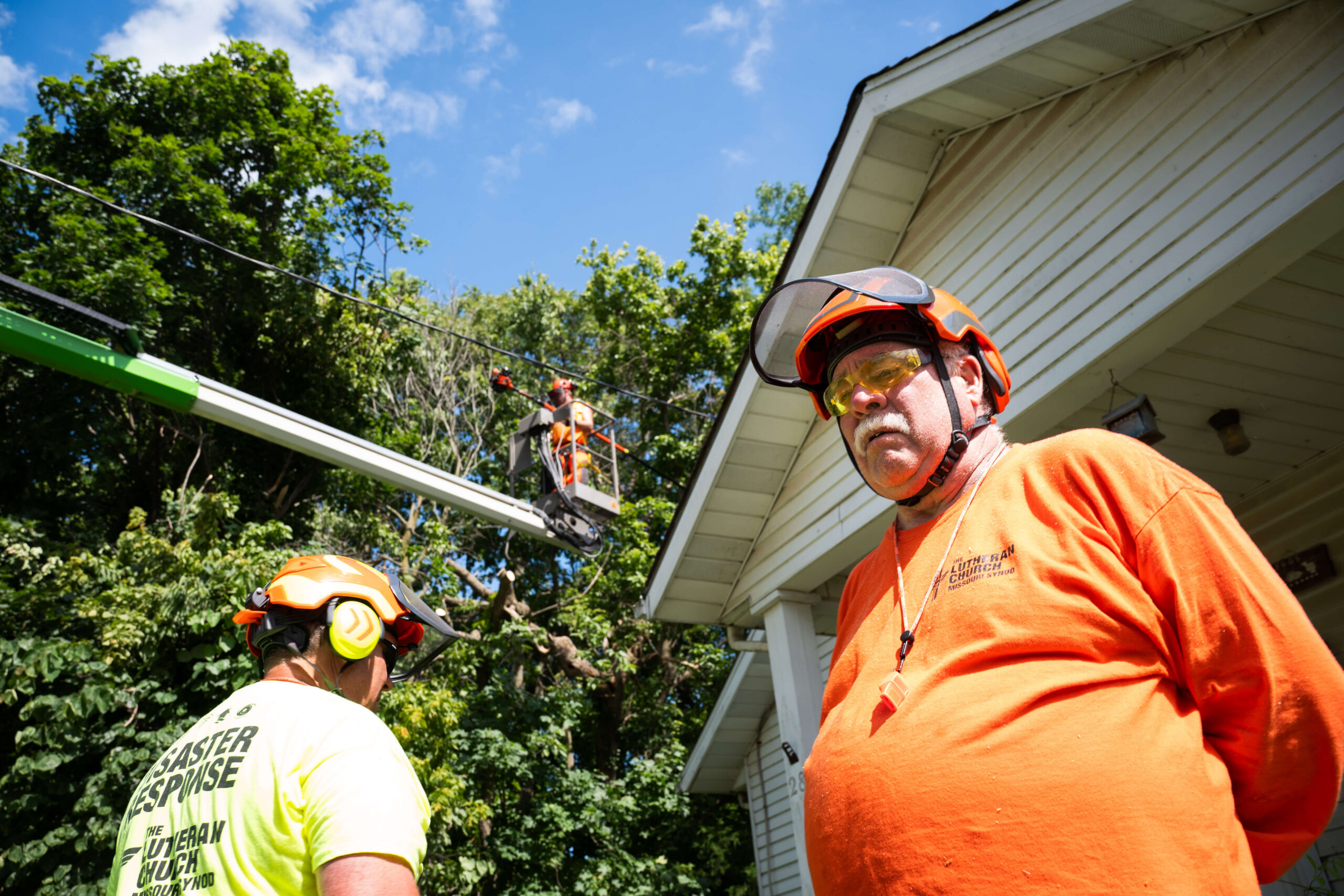
At one location in Charleston, LERT volunteers drove personally owned tractors and bobcats to clear away logs and trees, some as large as 5 feet in diameter. At another location, a retired lineman stood in a rented lift and cut down broken limbs from the home of a military veteran. In all locations, the volunteers were decked out in bright green clothing and equipped with all the necessary personal protective equipment.
“I’m a stickler for the protective equipment,” said Bryce Cramer, a LERT trainer and member of Immanuel Lutheran Church, Murphysboro, Ill. If someone isn’t being safe, “we’re not afraid to call each other out,” he said.
As they work, word about the LERT crews gets out quickly, whether through Facebook, word of mouth, the neon green shirts or, in the case of Charleston, on the local radio. But the LERT crews do not take calls for help; instead, they direct those in need to the local LCMS congregation. This is intentional, not to burden the congregation, but to point to the place where ongoing help is found — the local church where Christ is preached and God’s people are fed.
A busy tornado season
Such tornado reports have become more common in Illinois this year. Already, the state has smashed the record of 139 reported tornadoes, set in 2024. The new record — as of only June 23 — sits at 200. Confirmed tornadoes, which are different from reported tornadoes because a tornado can be reported multiple times based on its location, have reached 157. On average, Illinois annually endures 50 confirmed tornadoes.
Effingham, Ill., also saw tornado activity on June 19. “Thanks be to God, the tornado dodged [around] three different cities. It dodged through Shumway, and then Effingham, and then Montrose,” said the Rev. Trey Dille, associate pastor of St. John’s Lutheran Church, Effingham. Some rural areas were still hit hard, however. Farms lost barns and silos, and many will have to wait until harvest to find all the missing bits of siding, roofing or metal barn.
Dille did not wait for folks to call the congregation but proactively contacted local disaster response authorities to let them know that the LERT volunteers were working in Charleston and could be called on for assistance. Those officials did not wait long; they soon reached out to Schuermann, who coordinated with the nearby LERT volunteers in Charleston to provide help.
‘Small but mighty’
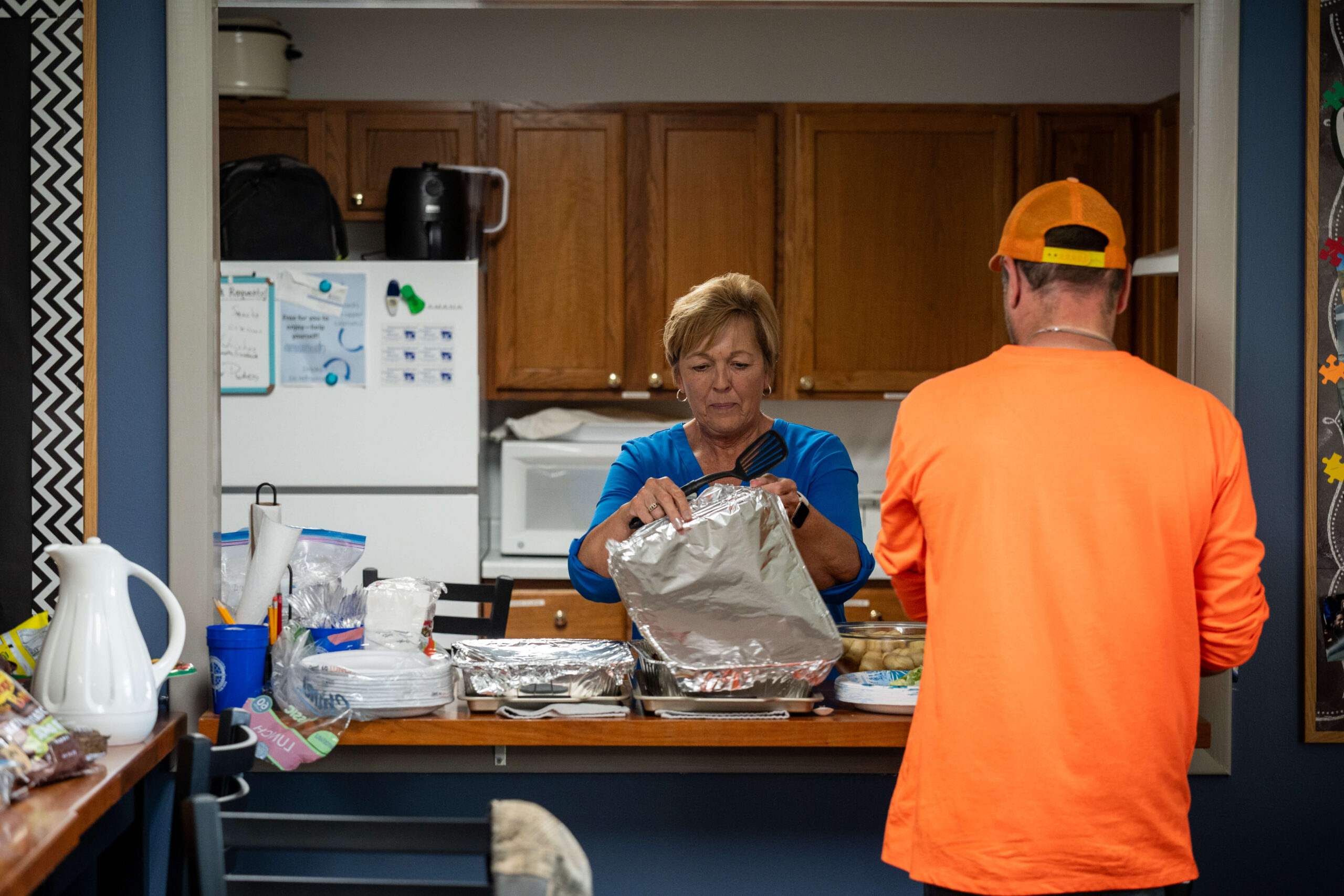
To accommodate the LERT volunteers in Charleston, Immanuel opened its campus ministry center for the volunteers to stay. Congregation members have opened their homes for the volunteers to have showers. And local congregations have banded together to help feed the volunteers multiple meals a day.
“I don’t require it,” Schuldt said, “but I always ask if the LWML ladies will help feed the volunteers.” Schuldt provides the supplies; he simply asks if the volunteers can cook it. So far, he’s not been turned down. During one LERT deployment, he recalled, members of LCMS congregations from the surrounding region donated 100 casseroles in a single day to feed the volunteers.
For the deployment to Charleston with around 15 volunteers, Schuldt doesn’t need 100 casseroles. But members of Immanuel stepped up to help, as did members of St. Paul’s Lutheran Church, Mattoon, Ill. Renee Williams, a member of St. Paul’s, coordinated food for the LERT volunteers from June 24 to July 1. Her only worry: The LERT teams have been so effective, they might be finished early.
Williams’ joyful spirit pervades the work of the volunteers, whether from LERT or the local congregation. She describes her own congregation as “small but mighty.”
Bryce Cramer encourages LERT trainings for LCMS congregations. A trained team can help not only in times of disaster but at other times as well. Between disasters, the LERT volunteers at Cramer’s congregation keep up their skills by doing projects for the elderly and others in their local community. Most important, such opportunities allow them to share the mercy and love of Christ, demonstrating that God can work mightily no matter how big or small a congregation is. It all starts with LERT training. To learn more, visit lcms.org/disaster.
Editor’s note: While this story focuses on tornado responses in Illinois, a tornado also recently ravaged Merrillville, Ind., damaging over 200 buildings and homes. Over the last week and a half, more than 24 LERT volunteers have assisted in these recovery efforts. If you are interested in supporting the response in a particular district, please reach out to the district in question.
Give to LCMS Disaster Response’s general disaster fund
Give to LCMS Disaster Response’s tornado relief fund
Posted June 25, 2026